Introduction
Elbows are the most frequently specified fitting in any piping system—yet mismatch between elbow type and application causes 30–40% of premature fitting failures in industrial maintenance records. The default behaviour in procurement is to pick the cheapest, most available option. That decision looks reasonable until a short-radius elbow in a slurry line erodes through in three months, triggering unplanned shutdowns that cost far more than the fitting itself.
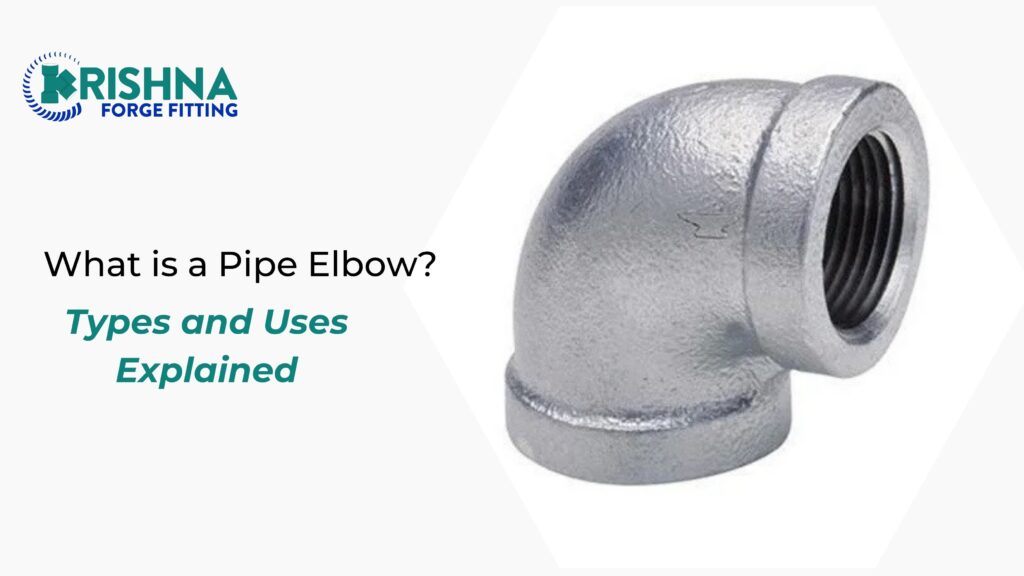
A pipe elbow is a curved fitting that changes fluid or gas flow direction within a pipeline. It differs from a pipe bend in that elbows come as standard factory fittings with fixed angles and radii, while bends are fabricated to custom geometry from pipe stock.
Elbows are available in three standard angles, two radius configurations, four connection methods, and a wide range of materials. This guide covers each category with the technical detail needed to specify the correct elbow the first time.
Elbow Angles
90-Degree Elbows
Ninety-degree elbows account for the majority of all industrial elbow orders. They create a right-angle turn to route pipes around structural obstacles, between equipment levels, or within equipment skids. Both long-radius and short-radius variants exist in 90-degree geometry, and the radius choice affects pressure drop significantly more than most engineers account for.
45-Degree Elbows
Forty-five-degree elbows change flow direction gradually, cutting pressure drop roughly in half compared with a 90-degree elbow at the same pipe size. Two 45-degree elbows separated by a short spool piece can replace a single 90-degree elbow where layout allows—this approach lowers turbulence and extends service life in high-velocity applications.
180-Degree Return Bends
Return bends reverse flow direction completely, creating a U-turn in the pipeline. Heat exchangers, boiler coil systems, and condensate return lines use 180-degree elbows where two parallel pipe runs must be connected in a compact space. They are available in open-return (wider opening gap) and close-return (tighter gap) patterns depending on space constraints.
Elbow Radius Types
Long-Radius Elbows (1.5D)
Long-radius elbows maintain a centreline radius equal to 1.5 times the pipe diameter. This geometry produces a K-factor of approximately 0.4 in turbulent flow, generating roughly half the pressure loss of a short-radius alternative at the same pipe size. Most industrial piping specifications default to long-radius construction unless space or budget constraints force otherwise.
Short-Radius Elbows (1.0D)
Short-radius elbows use a 1.0D centreline radius, reducing the turning envelope by one-third compared with long-radius designs. This compactness suits equipment skids, retrofit installations, and pipework in confined plant rooms. The trade-off is a K-factor near 0.9—more than double the pressure loss of a long-radius elbow—and significantly higher outer-wall erosion rates in abrasive or particle-laden service.
Reducing Elbows
Reducing elbows change direction and step down pipe diameter in a single fitting. They eliminate a separate reducer, cut the number of weld joints by one, and reduce turbulence compared with placing a reducer immediately downstream of a standard elbow. Specify reducing elbows where layout is tight and diameter transitions are needed at the same bend point.
Elbow Connection Methods
Butt Weld Elbows
Butt weld elbows use bevelled ends that receive full-penetration welds, creating joints that match or exceed pipe strength. ASME B16.9 governs dimensions from NPS ½ through 48 inches. This connection type suits high-pressure and high-temperature service across all industrial sectors.
Socket Weld Elbows
Socket weld elbows accept pipe ends into recessed sockets sealed by external fillet welds. They function reliably in small-bore lines from ½ inch to 2 inches at pressure classes up to 9000, making them standard in instrumentation, control, and chemical injection piping.
Threaded Elbows
Threaded elbows use male or female tapered pipe threads for no-weld assembly. Installation requires only a pipe wrench and thread sealant. Maximum reliable service stays below 400 PSI—beyond this, vibration loosens threads and creates leak paths regardless of initial torque.
Flanged Elbows
Flanged elbows bolt to companion flanges using standard gaskets and fasteners. They suit applications requiring repeated disassembly for cleaning, inspection, or equipment removal. The bolted connection tolerates moderate vibration better than threaded joints while retaining full removal capability.
Materials
Carbon Steel
ASTM A234 WPB carbon steel handles general industrial service below 400°C at the lowest material cost. Oil and gas, power generation, and general process applications make carbon steel the default material. Approximately 65% of industrial elbow orders use this grade.
Stainless Steel
Grades 304 and 316 provide corrosion resistance in chemical processing, food production, pharmaceutical manufacturing, and marine service. Grade 316 adds molybdenum for chloride resistance. Stainless elbows cost three to five times more than carbon steel but eliminate coating requirements and deliver multi-decade service life in corrosive environments.
Alloy Steel
ASTM A182 grades F11, F22, and F91 maintain pressure ratings above 500°C in power generation boilers, steam headers, and high-temperature process lines. Standard carbon steel loses structural integrity above 400°C—alloy grades extend the usable temperature range without switching to more expensive stainless steel.
Industrial Uses
Elbows serve direction-change functions across every sector with significant piping infrastructure:
- Oil and gas: High-pressure pipeline routing, refinery process lines, offshore platform pipework
- Power generation: Boiler steam lines, condensate return, turbine inlet and exhaust piping
- Chemical processing: Corrosive fluid routing, reactor feed lines, solvent transfer systems
- Water treatment: Distribution mains, pump discharge headers, filtration equipment connections
- Food and beverage: Sanitary stainless steel systems requiring smooth internal bores and cleanable surfaces
- HVAC: Air handling ductwork, chilled water circuits, heating coil connections
Selection Checklist
Match every elbow order against these parameters before purchase:
- Angle: 90°, 45°, or 180° based on required direction change
- Radius: Long-radius (1.5D) for flow efficiency; short-radius (1.0D) only where space dictates
- Connection method: Butt weld for high-pressure permanent joints; socket weld for small-bore high-pressure; threaded for low-pressure disassembly; flanged for repeated removal
- Material: Carbon steel for general service; stainless for corrosive media; alloy steel above 400°C
- Pressure class: Verify rating against maximum operating pressure including transient spikes
- Pipe size and schedule: Confirm ASME B16.9 or B16.11 dimensions match adjacent pipe OD and wall thickness
Standards and Specifications
- ASME B16.9: Factory-made butt weld elbows, NPS ½ through 48 inches
- ASME B16.11: Forged socket weld and threaded elbows, NPS ½ through 4 inches
- Both standards define centre-to-face dimensions, wall thickness, bevel angles, and dimensional tolerances
Frequently Asked Questions
What is the difference between a pipe elbow and a pipe bend?
Elbows are standard factory fittings with fixed angles (45°, 90°, 180°) and fixed radii (1.0D or 1.5D), manufactured to ASME dimensional standards. Bends are fabricated from seamless pipe to custom radii—typically 3D, 5D, or 10D—using induction or hot bending processes. Elbows offer faster delivery and lower unit cost; bends deliver better flow efficiency and erosion resistance in high-velocity or abrasive service.
When should I use a long-radius elbow instead of a short-radius elbow?
Use long-radius elbows in any application where flow velocity exceeds 1 m/s, where the media carries particles or solids, or where cumulative pressure loss across multiple elbows affects pump sizing. Short-radius elbows suit only clean-fluid, low-velocity systems in tight spaces where a long-radius elbow physically cannot fit. The pressure drop and erosion penalties of short-radius construction multiply across each elbow in the system.
Which elbow material suits corrosive chemical service?
Grade 316L stainless steel handles most acidic and chloride-containing process fluids, with the molybdenum addition providing measurably better pitting resistance than grade 304. For highly concentrated acids or mixed chemical streams, consult a corrosion resistance chart before specifying—assumptions about material compatibility cause 20–30% of premature elbow failures in chemical plant applications. Alloy options such as duplex stainless or Hastelloy cover more aggressive environments where 316L proves insufficient.
Conclusion
Pipe elbows determine how efficiently and reliably a piping system navigates direction changes. Angle, radius, connection method, and material each affect pressure drop, service life, and maintenance requirements. Specify each variable against actual operating conditions rather than defaults. Share your pipe size, pressure class, media, and temperature range with our engineering team for a precise elbow recommendation.
Krishna Forge Fitting manufactures precision forged and butt weld elbows in 45°, 90°, and 180° configurations meeting ASME B16.9 and B16.11 specifications. We supply long-radius and short-radius elbows from ½ inch to 24 inches in ASTM A234 WPB carbon steel and stainless steel grades (304, 316, 316L) for oil and gas, petrochemical, power generation, chemical processing, and industrial piping applications.
Our manufacturing process delivers consistent wall thickness, correct bevel geometry, and dimensional accuracy verified before shipment. Every order includes material test certificates with full traceability, dimensional inspection records, and non-destructive examination reports as required.Request specifications, pressure-temperature ratings, and material recommendations at krishnaforge.com. Our engineering team provides application-specific guidance on radius selection, material grade, and connection type for every operating condition
