
Introduction
Flanges fail because they’re misunderstood. Engineers specify weld neck flanges where slip-ons would work. Buyers choose Class 150 for systems that need Class 300. Procurement teams order raised face flanges for flat face gaskets, then wonder why the joint leaks during commissioning.
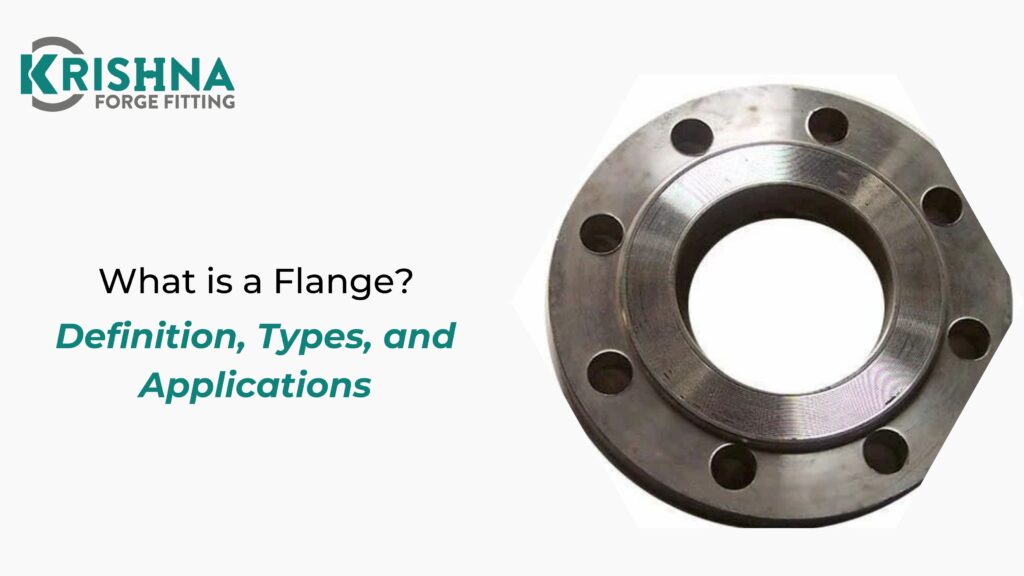
A flange is a protruding rim, edge, or collar used to connect pipes, valves, pumps, and other equipment in a piping system. The connection allows disassembly for maintenance without cutting pipe. Flanges distribute load across the joint, create a seal through gasket compression, and provide access points for inspection or modification.
This guide explains flange types, pressure classes, facing options, and material selection. You’ll learn which flange type suits specific applications, how pressure ratings work, and what specifications prevent installation problems. By the end, you’ll know how to specify flanges correctly—matching type, class, facing, and material to your system requirements without over-engineering or under-specifying.
Core Flange Types
Weld Neck Flanges
Weld neck flanges have a long tapered hub that transitions gradually from pipe to flange diameter. This design distributes stress and handles high pressure, temperature cycling, and bending loads better than any other flange type. Use weld neck flanges for critical service—high pressure, extreme temperatures, or cyclic loading conditions.
The full penetration butt weld creates a strong, leak-proof connection. Weld neck flanges cost 40-50% more than slip-ons but prevent failures in demanding applications.
Slip-On Flanges
Slip-on flanges slide over the pipe and weld at the top and bottom. They’re easier to align and faster to install than weld neck flanges. Lower initial cost makes them popular for low-pressure water, drainage, and HVAC systems.
The double fillet weld is weaker than a full penetration butt weld. Slip-on flanges aren’t rated for high cyclic loading or severe bending moments.
Blind Flanges
Blind flanges seal pipe ends or vessel openings. They provide access points for cleaning, inspection, or future expansion. Blind flanges must withstand full system pressure acting on the entire flange face—making them thicker and heavier than other flange types of the same class.
Threaded Flanges
Threaded flanges attach to pipe without welding. They suit small bore lines where welding is impractical and systems that prohibit hot work. Threaded connections can’t handle severe vibration or thermal cycling—the threads loosen over time.
Lap Joint Flanges
Lap joint flanges rotate freely on a stub end, allowing bolt hole alignment without pipe rotation. They suit systems that require frequent disassembly or use expensive alloy pipe where minimizing welding reduces cost.
Flange Facing Types
Flange faces create the sealing surface for gaskets. Raised face (RF) is the most common—a raised rim around the bolt holes compresses the gasket to create a seal. Flat face (FF) flanges have no raised area and suit cast iron or glass-lined equipment where stress concentration from raised faces causes cracking.
Ring type joint (RTJ) facings use metal ring gaskets trapped in a groove. RTJ flanges handle extreme pressure and temperature where soft gaskets fail. They’re mandatory for many API applications in oil and gas.
Pressure Classes and Ratings
ASME B16.5 defines flange classes: 150, 300, 600, 900, 1500, and 2500. Higher class numbers indicate thicker, heavier flanges with higher pressure ratings. A common mistake: pressure class is not the pressure rating. Class 150 carbon steel flanges can handle 285 PSI at 100°F but only 75 PSI at 800°F.
Pressure ratings drop as temperature rises. Material group determines the rate of de-rating. Stainless steel maintains higher pressure ratings at elevated temperatures than carbon steel.
Size affects pressure rating independently. Class 150 flanges rated for 285 PSI in NPS 1 drop to 230 PSI in NPS 24 due to reduced thickness-to-diameter ratios.
Material Selection
Carbon steel (ASTM A105 for forgings, A216 WCB for castings) dominates industrial flanges. It handles most oil and gas, power generation, and water applications.
Stainless steel grades—304, 316, duplex—resist corrosion in chemical processing, food production, and marine environments. Type 316 costs 50-70% more than carbon steel but eliminates corrosion failures in chloride service.
Alloy steels (P5, P9, P11, P22) handle high-temperature service in refineries and power plants. Nickel alloys and titanium suit extreme corrosion where steel fails.
Common Applications
Oil and gas operations use flanges at every pipe, valve, and equipment connection. High-pressure wellhead flanges reach Class 2500 ratings. Pipeline flanges typically use Class 150 or 300 with weld neck construction.
Chemical plants demand corrosion-resistant materials—stainless steel and exotic alloys dominate. Flange facing and gasket selection varies by chemical compatibility.
Power generation plants use alloy steel flanges for high-temperature steam lines. Pressure and temperature both peak in these applications, requiring careful material and class selection.
Water treatment facilities use lower-pressure flanges—Class 150 or 300 in carbon steel, ductile iron, or lined materials depending on water chemistry.
Installation Fundamentals
Bolt torque determines seal effectiveness. Under-torqued bolts leak. Over-torqued bolts crush gaskets and distort flanges. Follow ASME PCC-1 torque procedures for consistent results.
Gasket selection must match flange facing, pressure, temperature, and fluid type. Wrong gasket materials leak or fail catastrophically under temperature cycling.
Flange alignment prevents leaks and reduces bolt loading. Misaligned flanges create uneven gasket compression and concentrated stresses that accelerate failures.
Conclusion
Flange selection requires matching type, class, facing, and material to system conditions. Weld neck flanges handle high pressure and thermal cycling. Slip-ons suit low-pressure, low-temperature service. Pressure class determines thickness and bolt pattern but not pressure rating directly. Material selection depends on temperature and corrosion environment.
Specify flanges based on actual operating conditions—not nameplate values or what’s in stock. Verify pressure-temperature curves for your specific material and size.
Review your current flange specifications against actual operating pressure, temperature, and fluid chemistry. Identify where class, type, or material selection doesn’t match service conditions.
Krishna Forge manufactures precision-forged flanges—weld neck, slip-on, blind, threaded, and lap joint—in carbon steel (ASTM A105), stainless steel (ASTM A182), alloy steel, and nickel alloys. Our flanges meet ASME B16.5 and B16.47 dimensional standards across pressure classes 150 through 2500, with raised face, flat face, and RTJ facing options. Built for oil and gas, chemical processing, power generation, and heavy industry, our flanges deliver leak-proof connections with full material traceability and pressure testing.
Need flanges with verified pressure-temperature ratings and dimensional precision? Visit krishnaforge.com to review flange specifications, material options, pressure classes, and facing types. Get flanges engineered for your exact service conditions—with technical support that ensures correct specification from design through installation.
