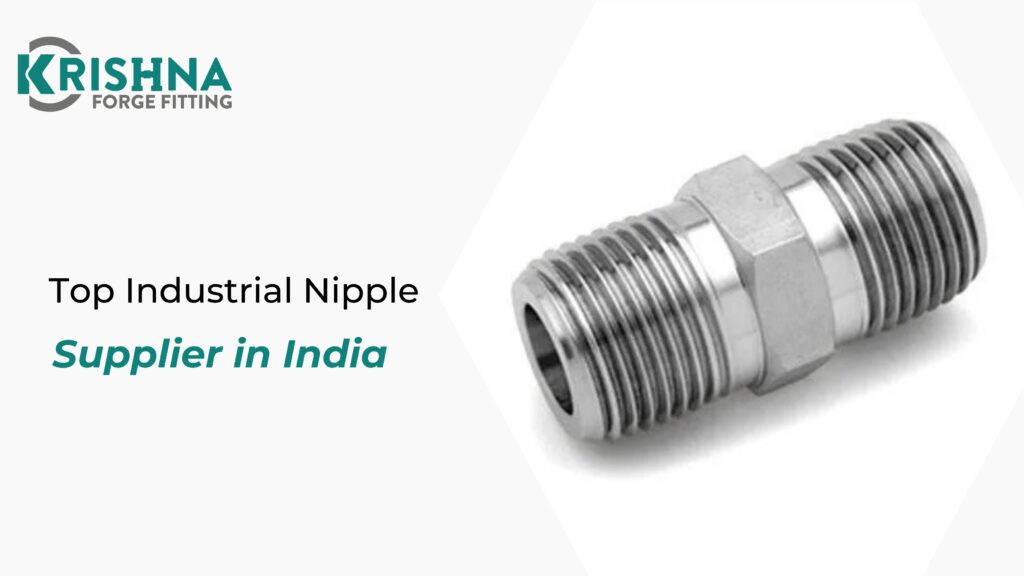
Every industrial engineer knows the nightmare: project timeline obliterated, not by complex machinery or sophisticated systems, but by a 2-inch pipe nipple that failed at 3 AM. Yet despite commanding $659.7 million in market value across India in 2024, industrial nipples remain the manufacturing world’s most overlooked critical component—until they’re not there.
The math is brutal and beautiful: India’s pipe fabrication market is expanding at 7.7% CAGR through 2030, but the real story isn’t in the growth—it’s in the gap. While everyone chases the glamorous projects, smart manufacturers are quietly dominating the unglamorous connectors that make everything else possible.
The 48-Hour Problem
Here’s what separates amateur suppliers from the professionals who keep India’s industrial backbone functioning: availability when chaos strikes. India leads global pipe market performance with an 8.25% CAGR, but growth means nothing when your production line stops because you can’t source a standard hex nipple on a weekend.
The industrial reality is unforgiving. Refineries, chemical plants, and power stations don’t operate on business hours. They operate on uptime percentages, where every minute of downtime translates to exponential costs. This is where Krishna Forge Fitting’s strategic positioning becomes invaluable: manufacturing and exporting all types of industrial fittings with the depth and responsiveness that emergency situations demand.
Material Science Meets Market Reality
Threading Tolerances That Actually Matter
The difference between a ₹50 nipple and a ₹500 nipple isn’t just markup—it’s metallurgy. Standard MS nipples handle basic applications, but when you’re dealing with high-pressure steam, corrosive chemicals, or temperature fluctuations that would destroy inferior fittings, material selection becomes mission-critical.
Forged vs. Cast: The Strength Divide
Cast fittings look identical until they fail. Forged fittings—Krishna Forge Fitting’s specialty—undergo grain structure realignment during manufacturing, creating 40% higher tensile strength and dramatically superior fatigue resistance. It’s the difference between planned replacement schedules and emergency shutdowns.
Custom Configurations: Beyond Catalog Thinking
Over 10,000 units of MS and GI pipe fittings sounds impressive until you realize most suppliers still think in standard catalog terms. Real industrial challenges require non-standard solutions: custom threading, specialized coatings, hybrid materials, and dimensional modifications that standard suppliers can’t deliver.
The Distribution Intelligence Game
Catering to over 500 industrial clients nationwide represents more than customer count—it represents logistics mastery. The best suppliers understand that inventory management isn’t about having everything in stock; it’s about having the right everything in the right place at the right time.
Regional Clustering Strategy
Smart suppliers map industrial density patterns. Gujarat’s chemical corridors, Maharashtra’s manufacturing belts, Tamil Nadu’s automotive zones—each region has distinct nipple requirements, pressure ratings, and emergency response needs. Located in Shapar, Veraval, Krishna Forge Fitting sits at the heart of Gujarat’s industrial ecosystem, enabling rapid response to the state’s massive petrochemical and heavy industry demands.
Supply Chain Resilience
The 2020 disruptions taught everyone a harsh lesson: global supply chains are fragile, but local manufacturing partnerships are resilient. Companies that survived supply chain chaos weren’t necessarily the largest—they were the most strategically positioned with reliable domestic suppliers who could pivot quickly.
Quality Assurance: Beyond Certifications
Pressure Testing Philosophy
Every serious nipple supplier talks about pressure testing, but few understand the difference between testing and validation. Real validation means understanding failure modes: how fittings fail under thermal cycling, chemical exposure, and mechanical stress over extended periods.
Traceability Systems
When a fitting fails in a critical application, traceability becomes everything. Heat lot numbers, material certifications, manufacturing dates, quality control records—this documentation isn’t bureaucracy, it’s liability protection and performance optimization intelligence.
The Engineering Partnership Advantage
Technical Support That Actually Supports
The best nipple suppliers don’t just sell products—they solve engineering challenges. When you’re designing a new process line or troubleshooting a recurring failure, you need suppliers who understand applications, not just specifications. Krishna Forge Fitting’s engagement in manufacturing and exporting comes with deep application knowledge that transforms vendor relationships into engineering partnerships.
Custom Solutions Capability
Standard nipples handle standard applications. Everything else requires customization capability: modified threads, specialized materials, non-standard dimensions, integrated features. The suppliers who thrive in India’s rapidly evolving industrial landscape are those who can engineer solutions, not just deliver catalog items.
The Strategic Sourcing Revolution
Smart procurement teams are redefining supplier relationships. Instead of chasing lowest unit cost, they’re optimizing total cost of ownership: reliability, responsiveness, technical support, and long-term partnership value.
Geographic Advantage
Maharashtra Seamless, Jindal Stainless, and APL Apollo dominate the large-scale market, but regional specialists like Krishna Forge Fitting offer proximity advantages that matter when emergency deliveries mean the difference between meeting production targets and explaining failures to shareholders.
The Consolidation Opportunity
Market growth to $906.2 million by 2033 will reward suppliers who understand that success isn’t about competing on price—it’s about delivering value when value matters most.
The industrial nipple market in India isn’t just growing; it’s professionalizing. The winners won’t be the cheapest suppliers or even the largest ones. They’ll be the smartest ones: those who understand that in manufacturing, the smallest components often carry the biggest consequences.
The bottom line: In a market where downtime costs more than premium fittings, choosing the right nipple supplier isn’t procurement—it’s risk management. And in Gujarat’s industrial ecosystem, that choice increasingly points to suppliers who combine manufacturing excellence with strategic positioning and engineering intelligence.
Because when everything else stops working, the connections better not.
