
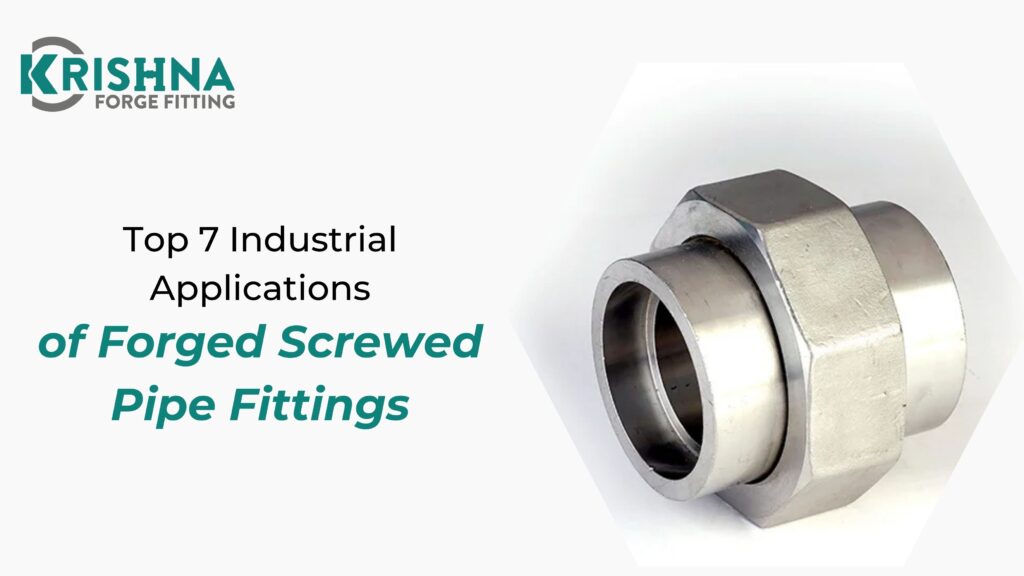
Most piping failures don’t happen because of bad materials. They happen because someone chose the wrong type of fitting. Forged screwed pipe fittings stand apart in a crowded marketplace for one reason—they’re built from compressed steel, not poured into molds. This matters when pressure surges hit or temperatures swing beyond design specs.
The global forged pipe fitting market reached USD 7.38 billion in 2024, with threaded pipe fittings projected to grow from USD 3.2 billion in 2023 to USD 5.1 billion by 2032. That growth signals a shift: industries are moving away from cast alternatives toward fittings that deliver 26% higher tensile strength and 37% higher fatigue strength. This piece breaks down seven industrial sectors where forged screwed fittings prove their worth through measurable performance gains.
Oil and Gas Industry
Forged screwed fittings dominate upstream, midstream, and downstream operations. The threaded connection eliminates welding in zones where hot work permits create delays or safety risks. These fittings handle pressure surges common in wellheads and gathering lines without cracking.
Field modifications happen without shutting down entire pipeline sections. A crew can thread in a new elbow or tee using hand tools, then pressure-test and restart flow within hours. The grain structure alignment from forging resists hydrogen sulfide corrosion better than cast alternatives.
Chemical and Petrochemical Plants
Process piping in refineries deals with corrosive fluids at temperature extremes. Forged screwed fittings maintain leak-tight seals where standard fittings develop porosity issues. The non-porous structure prevents chemical penetration that weakens joints over time.
Maintenance teams swap out corroded sections during turnarounds without cutting or welding. This speeds up scheduled shutdowns and reduces contractor costs. Plants using forged fittings report fewer unplanned outages from fitting failures.
Power Generation Systems
Steam lines in conventional and nuclear power plants operate under extreme pressure and thermal cycling. Forged screwed fittings withstand these conditions because forging compacts the grain structure, eliminating internal voids. When pulled to failure, these fittings show 58% area reduction versus 6% for cast fittings—meaning they deform visibly before catastrophic failure.
Boiler feedwater systems benefit from the corrosion resistance of forged stainless steel options. The threaded design allows for disassembly during inspections without damaging adjacent equipment.
Fire Fighting and Safety Systems
Fire suppression demands zero-failure components. Forged screwed fittings are recommended specifically for fire fighting lines because lives depend on system integrity during emergencies. The superior mechanical strength handles water hammer effects when sprinklers activate.
Installers can assemble entire fire protection networks without welding certifications or hot work permits. This cuts installation time and allows for easy system expansion as buildings grow. Periodic inspections don’t require destructive testing because threaded connections can be opened and resealed.
Pharmaceutical and Food Processing
Sanitary piping systems require smooth, non-contaminating surfaces. Forged fittings made from 316 stainless steel meet FDA standards while resisting caustic cleaning agents used between production runs. The lack of porosity prevents bacterial colonization that compromises product purity.
Process lines handling sterile fluids need frequent changeouts for different product batches. Threaded connections make these swaps routine instead of requiring specialized welding procedures that introduce contamination risks.
Marine and Offshore Applications
Saltwater environments destroy standard fittings through pitting and crevice corrosion. Forged screwed fittings in duplex or super duplex alloys resist chloride attack while maintaining pressure ratings. Offshore platforms use these fittings in ballast systems, hydraulic lines, and process piping.
Ship retrofits and repairs happen faster with threaded fittings because welding on vessels requires fire watches and ventilation setups. A threaded repair completes in a fraction of the time.
Mining and Construction Industries
Mining operations move abrasive slurries and high-pressure hydraulic fluids. Forged screwed fittings handle the mechanical abuse better than alternatives because forging creates uniform strength throughout the fitting body. The wear resistance extends service life in applications that would chew through cast fittings.
HVAC and plumbing systems in construction projects use forged screwed fittings for speed of installation. Crews assemble distribution networks without welders on payroll, and modifications during tenant fit-outs happen without coordinating hot work.
Frequently Asked Questions
Q: What pressure ratings do forged screwed fittings handle?
A: Forged screwed fittings typically handle 2000 PSI to 6000 PSI depending on size and material grade. The forging process creates higher pressure capabilities than cast fittings of identical dimensions.
Q: Why choose threaded over welded connections?
A: Threaded connections install without specialized equipment or certified welders. They allow for disassembly, inspection, and modification without cutting pipe or disrupting adjacent systems.
Q: Do forged fittings cost more than cast alternatives?
A: Initial costs run higher, but forged fittings deliver lower total cost of ownership. Extended service life, reduced maintenance, and fewer failure-related shutdowns offset the upfront premium.
Q: What size limitations exist for forged screwed fittings?
A: Standard forged screwed fittings max out at 4 inches (100mm). Larger sizes typically use flanged or welded connections.
Q: Can forged screwed fittings handle thermal cycling?
A: Yes. The uniform grain structure from forging provides superior fatigue resistance during repeated heating and cooling cycles compared to cast fittings.
Conclusion
The seven applications above share common threads: high consequences for failure, need for reliable sealing, and benefit from field modification capability. Forged screwed pipe fittings deliver measurable advantages in these scenarios—26% stronger tensile strength, 37% better fatigue resistance, and elimination of porosity defects that plague cast alternatives.
Make the switch to forged where performance matters. Contact us to discuss your specific application requirements.
Krishna Forge manufactures forged screwed pipe fittings engineered for critical industrial applications. Our fittings meet international standards including ASME B16.11 and are available in materials from carbon steel to exotic alloys. We supply industries that can’t afford failure—oil and gas, power generation, chemical processing, and marine installations.
Every fitting ships with material test certificates and dimensional inspection reports. Our technical team helps you select the right fitting grade and pressure class for your specific operating conditions.
Request a quote today at krishnaforge.com or call our engineering team to discuss your project specifications. We deliver reliable connections for demanding environments.
