
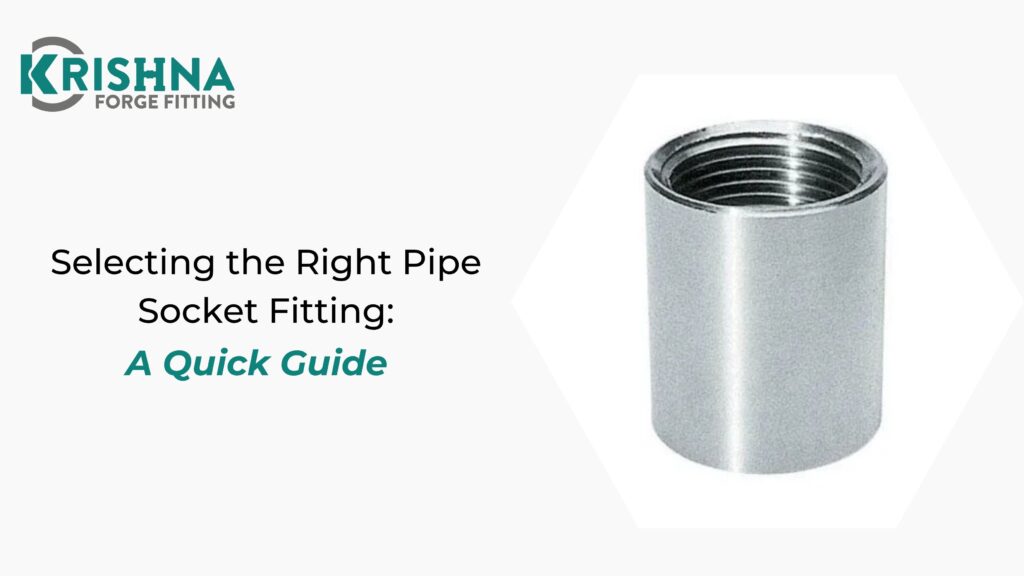
Introduction
Socket welded joints represent the most frequent source of through-wall leakage in industrial piping systems. Analysis of 2,399 nuclear piping failures between 1970 and 2001 identified 108 cases directly linked to socket weld joint problems—a 4.5% failure rate concentrated in one fitting type. Manufacturing data reveals an even broader problem: nearly 100,000 pipe fittings inspected over nine months showed a 1.83% defect rate, with 75.7% of failures traced to material selection and dimensional errors.
Here’s the uncomfortable truth: most socket fitting failures happen before installation begins. Engineers specify the wrong pressure class, procurement teams prioritize price over compatibility, and project managers ignore environmental factors that accelerate corrosion. The wrong material, mismatched pressure rating, or ill-fitting connection cascades into leaks, downtime, and safety risks.
This guide examines material compatibility, pressure rating verification, dimensional accuracy requirements, and application-specific considerations that prevent socket fitting failures.
Material Compatibility
Matching Pipe and Fitting Materials
Socket fittings must match pipe material to prevent galvanic corrosion. Carbon steel fittings on stainless steel pipes create electrochemical reactions that accelerate material degradation. Brass components combined with dissimilar metals form weak points for leakage.
Material incompatibility causes 30-40% of premature pipe fitting failures in industrial applications. Chemical exposure, moisture, and temperature fluctuations accelerate corrosion when materials mismatch.
Chemical Resistance Requirements
Process fluid properties dictate material selection. Acidic media corrode carbon steel rapidly, requiring stainless steel alternatives. Chloride-containing fluids attack specific stainless grades while leaving others unaffected.
Consult chemical compatibility charts before specifying materials. Assumptions about material resistance cause failures that surface only after months of operation.
Pressure and Temperature Ratings
Understanding Rating Interdependence
Pressure and temperature ratings are inextricably linked—not separate specifications. A Class 3000 socket fitting handles 3,000 PSI at ambient temperature but drops to 60-70% of that capacity at 400°C.
Ignoring this relationship installs weak links destined to fail. These ratings represent operational limits determined through rigorous engineering analysis and testing, not suggestions.
Accounting for Transient Conditions
Calculate peak pressure during startups, shutdowns, and valve operations. Pressure surges exceed steady-state values by 200-300% in many systems. Specifying fittings based solely on normal operating pressure creates failure conditions during transients.
Dimensional Accuracy
Socket Bore and Pipe OD Matching
Socket bore diameter must match pipe outer diameter within +0.020 to -0.000 inches for sizes 1½ inches and smaller. Larger sizes allow +0.025 to -0.000 inch tolerance. Exceeding these limits creates gaps that compromise weld quality or interference that prevents proper assembly.
Verify pipe schedule matches socket depth specifications. Schedule 40 and Schedule 80 pipes require different socket dimensions. Mixing schedules without verification guarantees fitment problems.
Expansion Gap Criticality
Socket weld fittings require a 1/16 inch gap between pipe end and socket shoulder. Insufficient gap causes catastrophic stress increases—from 152 ksi to 230 ksi at the weld root during thermal transients when no gap exists.
This represents a 51% stress increase that accelerates fatigue failures. High cycle fatigue from vibration already causes most socket weld failures. Adding thermal stress compounds the problem exponentially.
Application Environment
Vibration and Fatigue Considerations
High cycle fatigue due to vibration represents the most common socket weld failure mode. Pumps, compressors, and reciprocating equipment generate vibrations that propagate through connected piping.
Systems with frequent pressure cycling or temperature changes experience accelerated fatigue damage. Stress corrosion cracking, pre-existing weld defects, and vibration combine to force unplanned outages.
External Environmental Factors
External conditions matter as much as internal media. Humidity, salinity, UV exposure, and ambient temperature affect fitting performance. Components performing perfectly in mild conditions fail rapidly in harsh environments.
Bare carbon steel rusts within months when exposed to moisture without protective coatings. Plan for environmental protection before installation.
Common Selection Mistakes
Choosing fittings based solely on initial purchase price ranks among the most dangerous mistakes. A fitting costing 30% less but failing within two years costs more than premium options lasting 20 years through rework, delays, recalls, and liability claims.
Using wrong fitting types creates immediate failure risks. A reducer installed where a coupling belongs compromises system integrity. Each fitting type serves specific functions—interchanging them invites problems.
Overlooking operating environment details causes 40-50% of premature failures. Temperature extremes, pressure fluctuations, and corrosive atmospheres require careful material and rating selection.
Installation Considerations
Preparation and Assembly
Poor installation practices cause a large percentage of socket fitting failures. Over-tightening threads, insufficient sealant, and misalignment create stress points. Components forced into place without proper sealing develop stress cracks over time.
Follow installation guidelines precisely and hydrostatically pressure-test joints before commissioning systems. This verification catches problems before they cause operational failures.
Inspection Requirements
Socket welds use fillet welds that cannot be radiographically inspected. Quality verification relies on surface examination—visual inspection, magnetic particle testing, or liquid penetrant testing. This increases dependence on proper welding procedures and welder skill.
Frequently Asked Questions
Why do socket weld fittings fail more frequently than other connection types?
Socket welds create crevices that trap corrosive agents and require precise expansion gaps that installers often miss. High cycle fatigue from vibration concentrates stress at the fillet weld root. Without proper gap maintenance, thermal transients increase weld stress by 51%, accelerating failure. The combination of installation sensitivity and vibration exposure makes them vulnerable in certain applications.
How does temperature affect socket fitting pressure ratings?
Temperature reduces material strength, lowering allowable pressure proportionally. At 400°C, most carbon steel socket fittings handle only 60-70% of ambient temperature ratings. Pressure and temperature ratings are interdependent—you cannot evaluate one without the other. Always consult pressure-temperature rating charts for your specific material grade.
What causes most socket weld fitting failures during installation?
Insufficient expansion gap accounts for 40-50% of failures through thermal stress-induced cracking. Material incompatibility causes another 30-40% through galvanic corrosion. Poor weld quality including inadequate penetration, porosity, or improper fillet profile creates immediate failure risk. Over-tightening, misalignment, and skipped sealant application contribute the remainder.
Can I specify socket fittings based on price alone?
Price-based selection is one of the most dangerous procurement mistakes. Initial fitting cost represents a fraction of total ownership cost. Failed fittings incur expenses from rework, delays, recalls, liability claims, and reputation damage that dwarf initial savings. Sub-standard raw materials, skipped heat treatment processes, and inadequate quality control plague low-cost suppliers.
Conclusion
Socket fitting selection requires matching materials, verifying pressure-temperature ratings, ensuring dimensional accuracy, and accounting for vibration and environmental factors. Specification errors before installation cause 75% of failures. Request technical specifications for your application from experienced manufacturers.
Krishna Forge Fitting manufactures precision forged socket weld fittings meeting ASME B16.11 specifications in Class 3000, 6000, and 9000 pressure ratings. We supply socket weld tees, elbows, couplings, unions, and caps from ½ inch to 4 inches in ASTM A105 carbon steel and stainless steel grades for industrial, oil and gas, petrochemical, and power generation applications.
Our quality control includes dimensional verification with calibrated gauges, socket depth inspection, material certification, and heat treatment verification before shipment. Each fitting receives complete material test reports documenting chemical composition and mechanical properties.
Contact our engineering team at krishnaforge.com for material selection guidance, pressure-temperature rating charts, and application-specific recommendations. We provide technical support for proper fitting specification in high-pressure, high-temperature, and corrosive service applications.
