
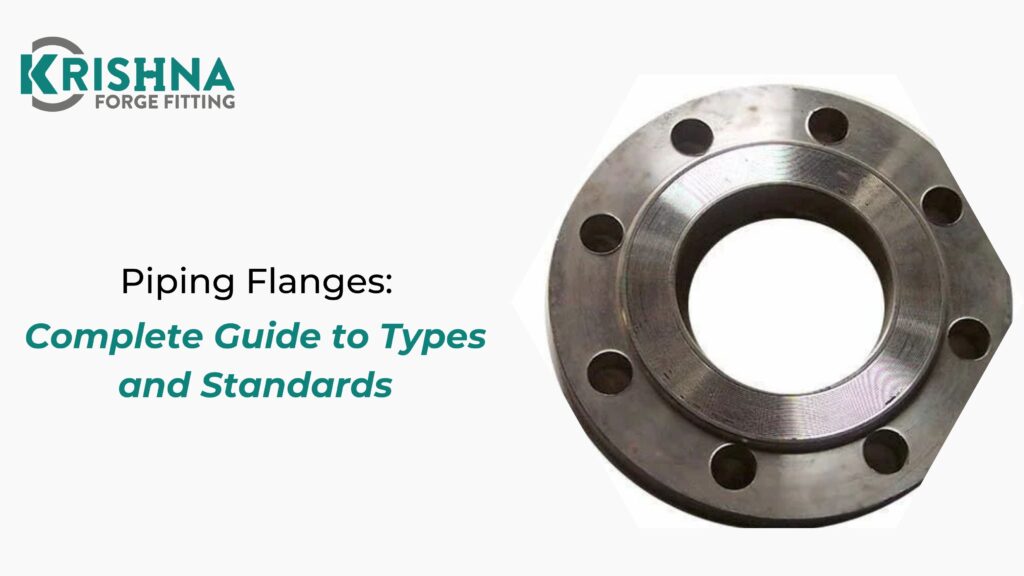
Introduction
Engineers specify Class 600 flanges for 200 PSI applications more often than they admit. This over-specification wastes 30-40% on unnecessary material, heavier bolts, thicker gaskets, and stronger pipe supports. The reverse problem—under-specifying flanges—causes catastrophic failures tracked in maintenance databases showing that 75.7% of piping defects originate from incorrect component selection before installation begins.
ASME publishes six separate standards governing flange design, dimensions, and pressure ratings. ASME B16.5 covers pipes from ½ inch to 24 inches. ASME B16.47 extends coverage to 60 inches for large diameter applications. Each standard defines thirteen flange types, seven pressure classes, five facing types, and dozens of material grades. This complexity creates specification errors that compromise system integrity.
This guide examines core standards, essential flange types, pressure class selection, material requirements, and application matching criteria. Understanding these elements prevents the costly mistakes that plague industrial piping projects.
Core ASME Flange Standards
ASME B16.5: Standard Flanges
ASME B16.5 governs flanges from NPS ½ inch through 24 inches in seven pressure classes: 150, 300, 400, 600, 900, 1500, and 2500. This standard defines dimensions, tolerances, facing types, bolt patterns, and material specifications for carbon steel, stainless steel, and alloy steel flanges.
Approximately 95% of industrial piping uses B16.5 flanges. The standard represents the default specification unless project requirements exceed its scope.
ASME B16.47: Large Diameter Flanges
Large diameter applications from NPS 26 through 60 follow ASME B16.47. This standard splits into Series A and Series B with different bolt patterns and dimensions. Series A aligns with MSS SP-44 dimensions, while Series B uses API 605 patterns.
The split creates procurement complications—verify which series project specifications require before ordering large flanges.
Other Flange Standards
- ASME B16.1: Cast iron flanges for low-pressure water, air, and steam
- ASME B16.36: Orifice flanges with pressure taps for flow measurement
- ASME B16.42: Ductile iron flanges for municipal water systems
- ASME B16.24: Cast copper alloy flanges for marine applications
Pressure Class System
Class Ratings Explained
Pressure class represents maximum allowable working pressure at specific temperatures. Class 150 handles 285 PSI at ambient temperature but drops to 180 PSI at 260°C. Temperature always reduces pressure capacity—the two ratings are interdependent.
Here’s the uncomfortable truth: “Class 150” doesn’t mean 150 PSI. The number is a nominal designation, not actual pressure. Consult pressure-temperature rating tables for accurate values.
PN Designations
European standards use PN (pressure nominal) designations: PN10, PN16, PN25, PN40, PN63, PN100. PN numbers approximate maximum pressure in bar at 120°C for carbon steel. PN40 roughly equals ASME Class 300, while PN100 approximates Class 600.
Cross-referencing ASME and PN systems requires careful verification—direct conversion creates specification errors.
Essential Flange Types
Weld Neck Flanges
Weld neck flanges feature tapered hubs that distribute stress through gradual thickness transitions. Full-penetration butt welding creates joints often stronger than pipe. Use weld neck construction above 600 PSI or 350°C where stress concentration cannot be tolerated.
These flanges cost 20-30% more than slip-on alternatives but deliver decades of leak-free service in demanding applications.
Slip-On Flanges
Slip-on flanges slide over pipe outer diameter and use two fillet welds. Installation takes half the time of weld neck flanges. Maximum reliable pressure stays below 300 PSI—higher ratings exist but cyclic service accelerates fillet weld failures.
Choose slip-on flanges for low-pressure utility piping where replacement costs little.
Blind Flanges
Blind flanges seal pipe ends with no bore opening. They close unused nozzles, provide inspection access, enable pressure testing, and allow future expansion. Every piping system needs blind flanges for isolation and maintenance purposes.
Socket Weld Flanges
Socket weld flanges contain recessed sockets accepting pipe ends secured by fillet welds. They suit small-bore lines from ½ inch to 2 inches where full butt welding becomes impractical. Socket weld construction reaches Class 3000 through 9000 despite simple design.
Threaded Flanges
Threaded flanges use NPT or BSP pipe threads for mechanical assembly without welding. They enable installation in hazardous atmospheres where hot work permits restrict welding. Maximum pressure stays below 400 PSI, and vibration loosens threads regardless of torque.
Lap Joint Flanges
Lap joint flanges combine loose backing flanges with stub ends welded to pipes. The backing flange rotates for bolt hole alignment. This construction cuts material costs by 40-60% when expensive alloys are required—only the stub end needs premium material.
Flange Facing Types
Raised Face (RF)
Raised face flanges feature a 1/16 inch or 1/4 inch raised surface that compresses gaskets. RF represents the most common facing type, used in 80-90% of applications. The raised area concentrates bolt load on the gasket for improved sealing.
Flat Face (FF)
Flat face flanges provide uniform seating across the entire flange face. They pair with cast iron or ductile iron flanges where raised faces would create stress concentration. Use FF facings for low-pressure systems below 150 PSI.
Ring Type Joint (RTJ)
RTJ flanges use machined grooves accepting metal ring gaskets. Metal-to-metal sealing handles extreme pressures and temperatures exceeding soft gasket capabilities. Oil and gas high-pressure systems specify RTJ construction above 900 PSI.
Material Selection
Carbon Steel
ASTM A105 forged carbon steel suits general industrial service below 400°C. This material provides adequate strength and corrosion resistance at the lowest cost. Cast carbon steel A216 WCB serves less demanding applications.
Stainless Steel
Grades 304 and 316 resist corrosion in chemical processing, food production, and pharmaceutical manufacturing. Type 316 adds molybdenum for superior chloride resistance in marine and coastal installations. Grade 316L reduces carbon content to minimize weld sensitization.
Alloy Steel
ASTM A182 alloy grades (F5, F11, F22, F91) maintain strength above 500°C in power generation and high-temperature processing. Each grade serves specific temperature ranges—verify grade requirements against operating conditions.
Selection Criteria
Match flange type to these parameters:
- Operating pressure: Compare to pressure-temperature rating tables
- Temperature range: Account for temperature derating of pressure capacity
- Pipe size: Verify standard covers required diameter
- Installation method: Consider welding constraints and skill availability
- Maintenance access: Plan for disassembly requirements
- Corrosion environment: Select material resistant to process media
- Cost constraints: Balance initial expense against lifecycle performance
Frequently Asked Questions
What is the difference between ASME B16.5 and B16.47 flanges?
ASME B16.5 covers flanges from ½ inch to 24 inches, while B16.47 extends from 26 inches to 60 inches. The standards use different dimension tables, bolt patterns, and facing designs. B16.47 splits into Series A and Series B with non-interchangeable bolt patterns, creating procurement challenges when mixing series.
How do I convert between ASME Class and PN pressure ratings?
Class 150 approximates PN20, Class 300 equals roughly PN40, and Class 600 corresponds to PN100. These are approximations only—the rating systems use different temperature bases and calculation methods. Always consult official cross-reference tables or pressure-temperature rating curves rather than assuming direct equivalence.
When should I use RTJ facing instead of raised face?
RTJ facing is mandatory above 900 PSI or when temperature exceeds 450°C and soft gaskets cannot maintain seal integrity. Oil and gas wellhead equipment, high-pressure steam systems, and critical process lines specify RTJ construction. The metal ring gaskets cost 10-20 times more than soft gaskets but eliminate leak paths in extreme conditions.
Can I mix different flange types in the same system?
Yes, but verify bolt patterns and facing types match between mating flanges. A Class 300 weld neck flange mates properly with a Class 300 slip-on or blind flange of the same size. Mixing pressure classes or standards creates dimensional mismatches preventing proper assembly. Always match nominal size, pressure class, and facing type across bolted joints.
Conclusion
Piping flange selection requires matching type, pressure class, material, and facing to operating conditions. ASME standards define specifications that prevent failures when correctly applied. Consult pressure-temperature rating tables and verify dimensional compatibility before purchasing. Request technical specifications for your system requirements.
Krishna Forge Fitting manufactures precision flanges meeting ASME B16.5 specifications in weld neck, slip-on, blind, socket weld, threaded, and lap joint configurations. We supply flanges from ½ inch to 48 inches in pressure classes 150# through 2500# using ASTM A105 carbon steel and stainless steel grades (304, 304L, 316, 316L) with raised face, flat face, and RTJ facing options for industrial, petrochemical, oil and gas, and power generation applications.
Our forging and CNC machining processes create dimensional accuracy per ASME B16.5 tolerances, proper facing finishes, and precise bolt hole spacing for leak-free gasketed joints. Quality control includes dimensional verification, material certification with EN 10204 3.1 test reports, pressure testing, and complete traceability documentation before shipment.Contact our engineering team at krishnaforge.com for flange specifications, pressure-temperature rating verification, material selection guidance, and facing type recommendations. We provide application-specific technical support for high-pressure, high-temperature, and corrosive service requirements with complete documentation for code compliance and project inspections.
