
Introduction
Industrial piping systems face a common enemy: flow turbulence that eats away at efficiency, drives up energy costs, and accelerates equipment wear. Every bend in your pipeline introduces friction and pressure drop, but the right elbow fittings can turn that challenge into a strategic advantage.
A poorly selected elbow can cause up to 30% more pressure loss compared to a well-designed alternative, yet the upfront cost difference is minimal. Something we could all do better.
This guide covers how industrial elbow fittings affect flow, identifying designs that best reduce turbulence and proposing installation practices for long-term system performance and efficiency.
Understanding Flow Turbulence in Pipe Bends
When fluid travels through a straight pipe, it moves in predictable layers. The moment it hits an elbow, that order breaks down.
Direction changes force the fluid to compress on the outer wall while creating low-pressure zones on the inner radius. This disruption generates turbulence—chaotic eddies that increase friction against pipe walls and drain energy from your system. The sharper the bend, the more violent the disruption becomes.
Pressure drop follows turbulence like a shadow. Each unit of turbulence translates directly into lost pressure that your pumps must compensate for, burning extra electricity and shortening equipment life.
Types of Elbow Fittings
45-Degree Elbow
The 45-degree elbow stands out for one reason: it offers the gentlest direction change available in standard fittings. By splitting a 90-degree turn into two softer bends, it cuts pressure drop by nearly 40% compared to a single sharp turn.
This design keeps fluid layers more organized through the transition. Industries running viscous fluids or high-volume operations see immediate returns in reduced pumping costs.
90-Degree Elbow
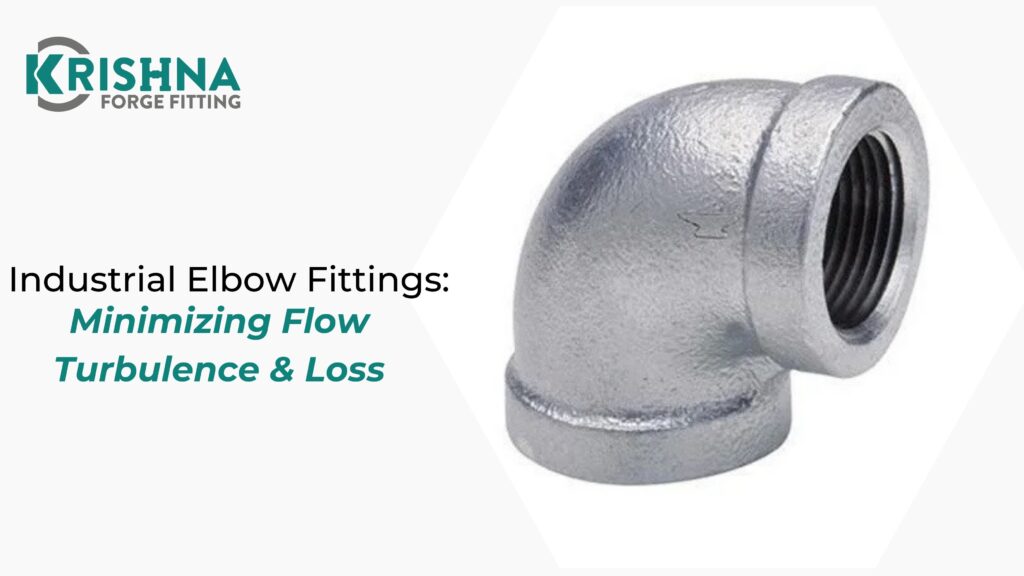
Sometimes space constraints force your hand, and that’s where 90-degree elbows come in. They deliver a right-angle turn in minimal footprint, but physics extracts a price.
Long radius 90-degree elbows (where the radius equals 1.5 times the pipe diameter) soften the blow compared to short radius versions, cutting pressure loss by up to 25%. When you must use a 90-degree fitting, always default to long radius unless physical space makes it impossible.
Short vs. Long Radius Design
The radius-to-diameter ratio controls everything. Long radius elbows spread the direction change over more distance, giving fluid molecules time to adjust their path gradually.
Short radius elbows compact that change into tighter geometry, which spikes turbulence but saves installation space. For applications where energy efficiency matters more than footprint—most industrial settings—long radius wins every time.
Design Features That Cut Flow Loss
Smooth Interior Surfaces
Wall roughness acts like sandpaper on flowing fluid. Even microscopic imperfections create drag that compounds over distance.
High-quality elbow fittings use precision manufacturing to achieve near-mirror finishes on interior surfaces. This attention to surface quality can reduce friction coefficients by 15-20% compared to rough-cast alternatives.
Material Selection
Stainless steel and alloy materials resist corrosion that would otherwise roughen pipe interiors over time. Carbon steel works for many applications but requires careful coating to maintain smooth flow paths.
The material choice also affects thermal expansion, which can create misalignments that disrupt flow at joints.
Installation Best Practices
Welding quality makes or breaks flow efficiency. Poor weld penetration creates internal ridges that trigger turbulence at every joint.
Proper alignment ensures the elbow’s centerline matches the pipe perfectly—even a few degrees of misalignment introduces asymmetric flow that increases pressure drop. Use alignment guides during installation and verify with precision measurement tools before final welding.
Support spacing matters too. Unsupported elbows can sag over time, creating low points where sediment accumulates and flow becomes restricted.
Strategies to Minimize Turbulence
Replace sharp 90-degree turns with two 45-degree elbows wherever your layout allows. The extra fitting cost pays back within months through energy savings.
Plan piping routes during the design phase to minimize total bend count. Each eliminated elbow removes a source of pressure loss entirely. Route pipes along walls or overhead structures to create straighter runs.
Maintain straight pipe sections equal to at least 10 pipe diameters before and after each elbow when possible. This gives flow time to stabilize between direction changes.
Conclusion
Flow turbulence costs money every hour your system runs. The right elbow fittings, properly installed, cut that waste while extending equipment life and reducing maintenance needs.
Choose designs that match your application’s pressure requirements, space constraints, and fluid characteristics. Invest in quality manufacturing and precision installation—the returns compound for decades.
Krishna Forge manufactures socket weld and threaded elbow fittings built to strict ASTM and ASME standards, with precision bore finishes that minimize flow disruption from day one. Our engineering team helps you select the optimal elbow configuration for your system’s unique demands.
Ready to cut your pumping costs? Contact Krishna Forge today for technical specifications and custom elbow solutions that deliver measurable efficiency gains.
