
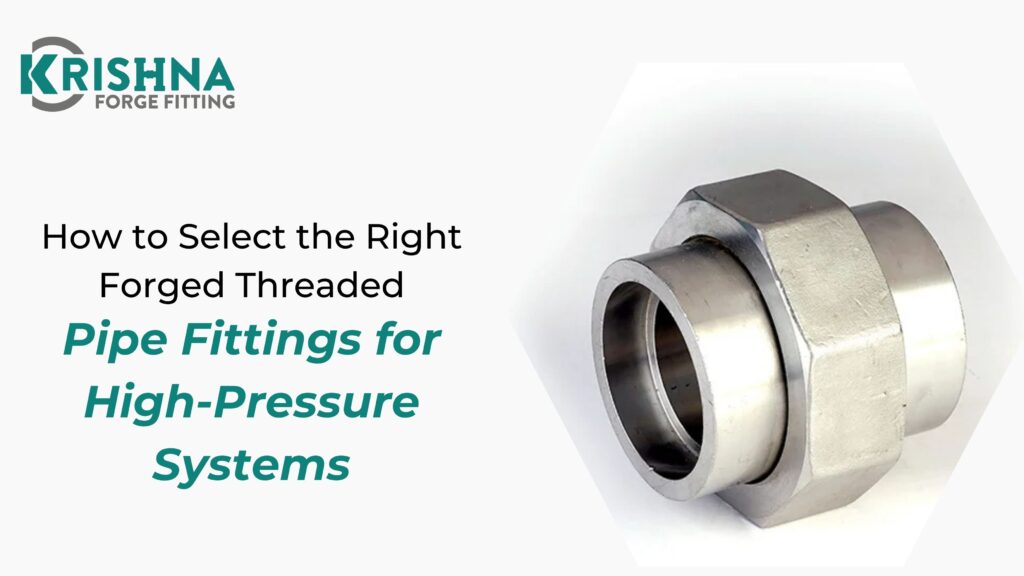
High-pressure systems fail when fittings can’t handle the load. A single weak connection point in an oil pipeline, chemical plant, or steam line can cause costly shutdowns, safety hazards, and system-wide damage. The wrong fitting choice doesn’t just risk leaks—it puts people and operations at stake.
Forged threaded pipe fittings offer a solution that goes beyond basic functionality. These components deliver 26% higher tensile strength and 37% better fatigue performance compared to cast alternatives, translating to longer service life and fewer unexpected failures. Industries handling extreme pressure, corrosive chemicals, and high temperatures depend on these fittings because they work when conditions get tough.
This guide walks through the key factors that matter when selecting forged threaded fittings for high-pressure applications. You’ll learn how to match materials to system requirements, decode pressure ratings, understand threading standards, and avoid common selection mistakes. Each section gives you the technical clarity needed to make a purchasing decision that protects your investment and keeps your system running.
Understanding Material Selection
The material you choose determines how well fittings resist corrosion, handle temperature swings, and maintain structural integrity under stress. Carbon steel works for general industrial use where cost matters and corrosion is manageable. Stainless steel grades like 304 and 316 handle aggressive chemicals and high-temperature environments found in petrochemical processing.
Alloy steel fittings bring additional strength for extreme conditions. When systems operate at 3000 PSIG or higher, the grain structure and composition of forged alloys provide the durability needed to prevent catastrophic failure.
Material choice also affects long-term maintenance costs. While stainless and alloy options cost more up front, they reduce replacement frequency and downtime in corrosive or high-stress environments.
Matching Pressure Ratings to System Requirements
Pressure ratings aren’t suggestions—they’re the upper limits before fittings fail. Forged threaded fittings come in standard pressure classes: 2000 LB, 3000 LB, and 6000 LB. Each rating corresponds to specific wall thickness and material specifications designed to contain internal pressure without rupturing.
Calculate Operating Pressure with Safety Margin
Take the maximum operating pressure of your system and add a safety buffer of at least 25%. If your system runs at 2400 PSIG during peak operation, select fittings rated for 3000 PSIG minimum. This cushion accounts for pressure surges, temperature fluctuations, and aging effects.
Consider Dynamic vs. Static Loads
Systems with frequent pressure changes need fittings with higher fatigue resistance. Forged components handle cyclic loading better than cast alternatives because their aligned grain structure resists crack initiation and propagation.
Threading Standards and Connection Types
NPT (National Pipe Taper) and BSPT (British Standard Pipe Taper) threads dominate industrial applications, but they aren’t interchangeable. NPT threads use a 60-degree angle and seal by thread deformation. BSPT threads require a sealing compound or washer for leak-proof connections.
Match threading standards to the rest of your piping system. Mixed threading types create weak points that fail under pressure. Verify thread dimensions with calibrated gauges before installation to catch manufacturing defects.
Threaded connections offer easier installation and maintenance compared to welded alternatives. You can disassemble and inspect them without cutting pipe, which matters in systems requiring regular servicing.
Size and Dimensional Accuracy
Forging produces tighter dimensional tolerances than casting. This precision ensures proper fit with other components and reduces leak paths at connection points.
Measure the nominal pipe size (NPS) of your existing system before ordering. Size mismatches create stress concentrations that accelerate failure. Standard forged fittings range from 1/8 inch to 4 inches for threaded connections.
Check bore diameter specifications. Restrictions in flow path increase pressure drop and reduce system efficiency, especially in high-volume applications.
Verification and Quality Assurance
Certified manufacturers test fittings at rated pressures before shipping. Look for documentation showing hydraulic pressure testing at 1000 PSIG, 3000 PSIG, or 6000 PSIG depending on the rating class.
Compliance with ASME B16.11 and relevant IS standards ensures fittings meet minimum mechanical properties and dimensional requirements. These standards define testing procedures, material grades, and acceptable defect limits.
Request material test reports (MTRs) that verify chemical composition and mechanical properties. These documents trace material origins and confirm heat treatment procedures were followed.
Common Selection Mistakes to Avoid
Don’t assume all forged fittings perform equally. Manufacturing quality varies, and cheaper options often skip critical testing steps or use substandard materials. The global threaded pipe fittings market grew from USD 3.2 billion in 2023 to a projected USD 5.1 billion by 2032, with quality differentiation becoming more important as demand increases.
Avoid over-specifying when standard ratings suffice. A 6000 LB fitting costs significantly more than a 3000 LB option, and the extra capacity may not add value in moderately pressured systems.
Never mix dissimilar metals without understanding galvanic corrosion risks. Stainless steel fittings paired with carbon steel pipe create electrochemical reactions that accelerate degradation in wet environments.
Frequently Asked Questions
Q: What makes forged fittings better for high-pressure systems than cast fittings?
A: Forging aligns the metal’s grain structure and eliminates internal voids common in castings. This results in 26% higher tensile strength and 37% better fatigue performance. The refined microstructure handles pressure surges without cracking, making forged fittings last longer in demanding conditions.
Q: How do I know which pressure rating to choose?
A: Calculate your system’s maximum operating pressure and add at least a 25% safety margin. If your system peaks at 2000 PSIG, select 3000 LB rated fittings. Systems with frequent pressure changes need additional buffer for fatigue resistance.
Q: Can I replace cast fittings with forged ones in an existing system?
A: Yes, and it often improves reliability. Oil and gas operations that switched to forged fittings reported significant reductions in pipeline failure rates and maintenance costs. Ensure threading standards, sizes, and material compatibility match your existing setup.
Q: What’s the difference between NPT and BSPT threads?
A: NPT uses a 60-degree thread angle and creates a seal through thread deformation under torque. BSPT requires additional sealant or gaskets. Never mix these standards in the same system—they won’t seal properly and will leak under pressure.
Q: Do forged fittings require special installation procedures?
A: Follow standard torque specifications for the thread size and use appropriate sealant for the media being transported. Check threads with calibrated gauges before assembly. Proper installation takes no longer than cast fittings but pays off in leak-free operation.
Conclusion
High-pressure systems demand fittings that won’t fail when conditions get extreme. Forged threaded pipe fittings deliver the strength, durability, and pressure resistance needed for reliable long-term performance. Match materials to your operating environment, verify pressure ratings against your system requirements, follow threading standards, and work with manufacturers who test their products thoroughly.
Take action now: review your current fitting specifications and identify areas where forged alternatives could reduce failure risk and maintenance costs.
Krishna Forge manufactures precision forged threaded pipe fittings engineered for high-pressure industrial applications. Our fittings meet ASME B16.11 standards and undergo rigorous hydraulic pressure testing to ensure leak-proof performance in demanding environments. Whether you’re upgrading existing systems or specifying components for new installations, we deliver the technical quality and reliability your operations require. Visit krishnaforge.com to explore our full range of forged fittings and connect with our technical team for application-specific guidance.
