
Introduction
Most piping failures don’t originate from catastrophic blowouts—they start at connection points where someone spec’d the wrong nipple. Joints and fittings consistently fail at 150-200 PSI in systems designed for much higher pressures, not because the pipe can’t handle it, but because the connector creates a weak link. The difference between a SCH40 and SCH80 nipple isn’t just wall thickness—it’s the gap between 450 PSI capacity and 630 PSI performance.
Industrial nipple selection involves matching schedule ratings, material grades, connection types, and length specifications to actual operating conditions. A hex nipple allows wrench access for proper torque control, while a close nipple creates the tightest possible connection but risks thread damage during installation. This guide breaks down how to select nipples that match your system’s pressure requirements, temperature ranges, and maintenance needs without over-engineering or creating failure points.
Understanding Nipple Types and Their Applications
Close Nipples
Close nipples create minimal spacing between two female-threaded pipes or fittings. The fully threaded design leaves almost no exposed section, producing the tightest possible seal. These work best for rigid installations where vibration isn’t a concern.
The downside shows up during maintenance. Technicians must grip the threaded portion directly with pipe wrenches, which damages threads and creates leak paths. Budget for replacement during every disassembly.
Hex Nipples
A hex section in the middle provides wrench purchase for controlled tightening. This design prevents thread damage and allows proper torque application. Hex nipples can connect different pipe sizes when manufactured with varying thread sizes on each end.
The hex section adds length between connection points. Calculate this spacing into system layouts, especially in tight installations where every inch counts.
Barrel and Long Nipples
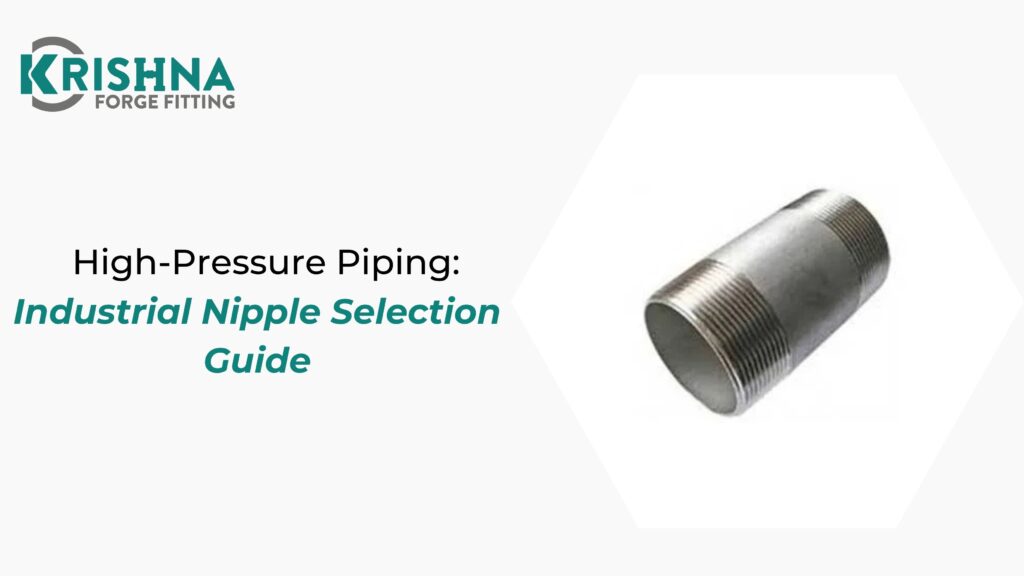
Standard barrel nipples range from 1.5 to 6 inches in length. Longer nipples extend beyond 6 inches and serve spacing requirements between equipment. Length introduces bending stress vulnerabilities in high-pressure systems, particularly where vibration exists.
Reducing nipples (swage nipples) change diameter along their length. This creates flow velocity changes and pressure drops that need calculation into system hydraulics.
Schedule Ratings and Pressure Capacity
Schedule numbers define wall thickness—the primary determinant of pressure handling. SCH40 represents standard weight, SCH80 offers extra-strong construction, and SCH160 provides maximum pressure capacity.
Here’s what the numbers mean in practice:
- SCH40: 450 PSI working pressure in 1-inch PVC applications
- SCH80: 630 PSI working pressure, 40% stronger than SCH40
- SCH160: Used only where extreme pressure demands it
Mixing schedules within a system creates a failure cascade. The weakest schedule rating becomes your actual system limit. Using SCH40 nipples to connect SCH80 pipe defeats the entire pressure rating of your installation.
Material Selection for Operating Conditions
Mild steel nipples dominate industrial applications for their balance of strength, weldability, and cost. They handle standard water, oil, and gas service across temperature ranges from -20°F to 400°F.
Stainless steel grades (304, 316) resist corrosive chemicals and handle higher temperatures without degradation. The 316 variant adds molybdenum for chloride resistance in marine or chemical processing environments.
PVC and CPVC nipples suit low-pressure drainage and cold water systems but fail catastrophically in high-pressure or elevated temperature applications. Never substitute plastic nipples where metal specifications appear—the material lacks structural capacity for industrial loads.
Thread Standards and Connection Integrity
National Pipe Thread (NPT) creates the standard in North American industrial piping. The tapered thread design forms a mechanical seal that tightens as you advance the fitting. British Standard Pipe (BSP) threads use a different taper angle and aren’t interchangeable with NPT despite similar appearance.
Thread compatibility matters more than installers realize. Forcing mismatched threads creates cross-threading that looks tight but leaks under pressure. Verify thread standards before installation—visual inspection isn’t sufficient.
Installation Considerations That Prevent Failures
Proper sealant application prevents 80% of nipple-related leaks. Apply thread sealant to male threads only, starting two threads from the end. Over-application pushes sealant into the flow path where it contaminates systems or blocks instrumentation.
Hand-tighten first, then add 1.5 to 2.5 turns with a wrench depending on pipe size. Over-tightening cracks nipples or strips threads—both create immediate leak paths. Under-tightening allows pressure cycling to loosen connections over time.
Clean threads before assembly. Debris in threads prevents proper engagement and creates stress concentration points where cracks initiate.
Common Applications Across Industries
Oil and gas operations use heavy-wall stainless steel nipples in wellhead assemblies and process piping where hydrogen sulfide creates extreme corrosion. Chemical plants require 316 stainless to resist acids and caustic solutions that destroy carbon steel within months.
Power generation facilities employ high-schedule carbon steel nipples in steam systems operating above 400°F. Water treatment plants use brass nipples for chlorinated water service where galvanic corrosion isn’t a concern.
Frequently Asked Questions
What schedule rating do I need for 1000 PSI service?
SCH160 in most materials handles 1000 PSI, but verify with pressure-temperature charts specific to your pipe size and material. Smaller diameters handle higher pressures at given schedules due to reduced hoop stress.
Can I use hex nipples in sanitary applications?
The hex section creates a crevice that traps contaminants in food-grade or pharmaceutical systems. Use polished barrel nipples without hex sections for sanitary service.
Why do nipples fail before the pipe does?
Manufacturing processes thin the wall during threading, and the thread roots create stress concentration points. Joints and fittings consistently represent the weakest system components, failing at pressures well below pipe capacity.
Do I need different nipples for vibrating equipment?
Yes. Use close nipples or short hex nipples near pumps and compressors—longer nipples develop fatigue cracks from vibration-induced bending stress.
What causes threaded connections to leak years after installation?
Thermal cycling expands and contracts threads repeatedly, gradually loosening the mechanical seal. Pressure surges compound this by working threads against each other. Schedule retorquing during maintenance intervals.
Conclusion
Nipple selection determines whether your high-pressure system operates reliably or creates recurring maintenance problems. Match schedule ratings to actual operating pressures, verify thread compatibility, and choose materials that resist your specific process chemistry. The few extra minutes spent selecting the right nipple configuration prevents hours of emergency repairs.
Request engineering support for your next piping project—we’ll help spec the correct nipples.
Krishna Forge manufactures industrial pipe nipples in close, hex, barrel, and reducing configurations across SCH40, SCH80, and SCH160 wall thicknesses. Our nipples meet ASME B16.11 dimensional standards and ship with full material traceability in carbon steel, stainless steel 304/316, and alloy steel grades.
Every nipple undergoes thread inspection and pressure testing before shipment. We maintain inventory in standard lengths from close nipples through 12-inch configurations, with custom lengths available for specialized installations. Our technical team provides pressure-temperature calculations and material selection guidance for your specific operating conditions.
Get pressure-rated nipples with certified documentation at krishnaforge.com or contact our engineering team to discuss your high-pressure piping requirements. We deliver reliable connections for demanding industrial environments.
