
Introduction
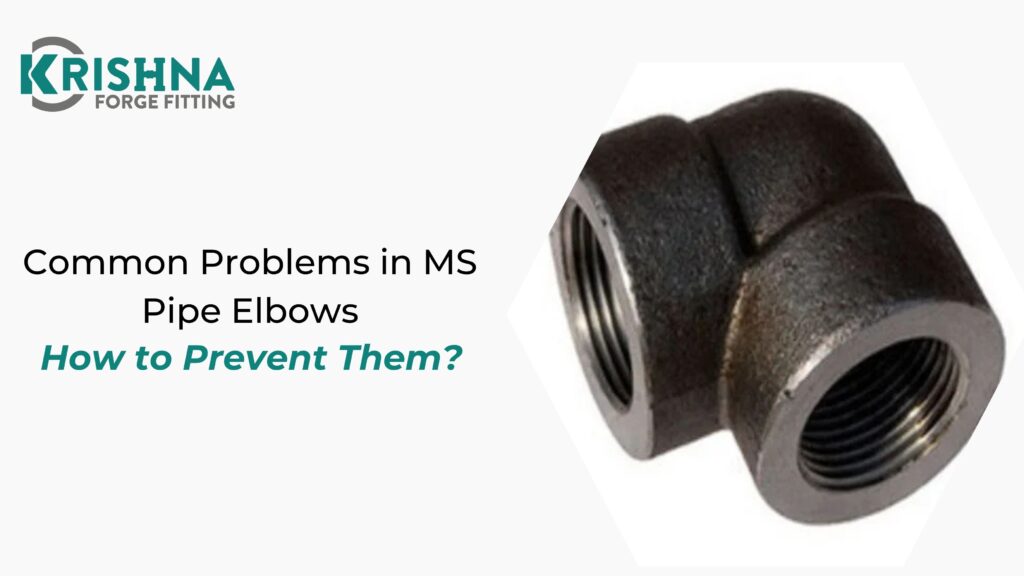
MS pipe elbows wear out faster than the straight sections they connect. In industrial piping systems carrying abrasive materials or corrosive fluids, 90-degree elbows fail at rates 42% higher than 45-degree alternatives due to turbulence and particle impact zones. When an elbow cracks or thins beyond safe limits, entire production lines shut down.
These failures aren’t random. Erosion-corrosion, welding defects, and installation errors create predictable weak points that lead to leaks, material loss, and safety incidents. Understanding where MS elbows fail and why puts control back in the hands of engineers and procurement teams who need reliable components.
This guide breaks down the most common problems affecting mild steel pipe elbows in industrial applications. Each section explains a specific failure mode, its root causes, and practical prevention methods that reduce maintenance costs and extend service life. The information here comes from failure analysis studies, manufacturing standards, and field observations across oil and gas, chemical processing, and power generation sectors.
Erosion and Abrasive Wear
Solid particles in fluid flow act like sandpaper on the inner walls of MS elbows. The outer radius of a bend experiences the highest erosion rates because particles impact the surface at angles that maximize material removal.
Studies on cement transport systems show that reducing erosion rates by coating elbow interiors with tungsten carbide nanoparticles can triple service life and cut maintenance costs by 75%. Without protection, elbows handling abrasive materials thin out within months rather than years.
Flow velocity matters more than most operators realize. Doubling fluid speed increases erosion damage by four times due to kinetic energy effects. In high-velocity systems, long-radius elbows reduce turbulence and particle impact severity compared to standard short-radius designs.
Prevention Methods
- Install wear-resistant coatings or linings in high-erosion zones
- Use long-radius elbows where space permits to reduce flow turbulence
- Reduce flow velocity through diameter increases or system redesign
- Schedule thickness inspections at intervals based on erosion rate calculations
Corrosion Damage
Mild steel corrodes when exposed to moisture, acids, or hydrogen sulfide commonly found in oil and gas applications. Corrosion rates accelerate at elbows because flow disruption creates zones where corrosive substances accumulate.
Pitting corrosion penetrates through walls faster than uniform surface corrosion. Small pits concentrate electrochemical activity and create through-holes before overall wall thickness appears critically low. In H2S environments, electrochemical reactions produce iron sulfide that weakens adhesion and exposes fresh metal to continuous attack.
Combined erosion-corrosion causes more damage than either mechanism alone. Erosion removes protective oxide layers, accelerating electrochemical corrosion rates by exposing reactive metal surfaces.
Prevention Methods
- Apply protective coatings like epoxy, polyurethane, or galvanizing before installation
- Use cathodic protection systems in buried or submerged applications
- Specify corrosion-resistant alloy grades for aggressive chemical environments
- Maintain dry storage conditions and apply rust preventatives during warehousing
Welding Defects
Poor welding creates immediate weak points that fail under operating pressure. Common defects in MS elbow joints include porosity from trapped gas, incomplete fusion between weld passes, slag inclusions, and microcracks in heat-affected zones.
Porosity reduces effective wall thickness and creates stress concentration points. A weld with 5% porosity can reduce joint strength by 20% or more. Lack of fusion between base metal and weld material means the joint relies on mechanical interlocking rather than metallurgical bonding.
Welding procedures matter as much as welder skill. Incorrect heat input, fast cooling rates, and contaminated surfaces produce defects even with experienced personnel.
Prevention Methods
- Require radiographic or ultrasonic testing of critical welds before commissioning
- Follow qualified welding procedures that specify preheat, interpass temperature, and cooling rates
- Clean joint surfaces thoroughly to remove oil, rust, and mill scale
- Verify electrode storage in dry conditions to prevent moisture absorption
Mechanical Stress and Vibration
Pipe systems expand and contract with temperature changes. When elbows can’t accommodate this movement, cyclic stress causes fatigue cracks. Vibration from pumps or flow turbulence accelerates crack propagation at connection points.
Thermal cycling matters most during startup and shutdown when temperature differentials reach maximum values. An elbow fixed rigidly at both ends experiences tension or compression forces that eventually exceed yield strength.
Prevention Methods
- Install expansion loops or flexible joints to absorb thermal movement
- Use vibration dampers and proper pipe supports to limit movement amplitude
- Calculate thermal expansion distances and provide adequate clearance
- Avoid rigid anchoring of elbows in systems with significant temperature swings
Installation Problems
Misalignment during installation creates stress concentrations that reduce service life. When connected pipe sections don’t line up properly, the elbow twists to bridge the gap. This preloads the component with residual stress before operation begins.
Over-tightening threaded or flanged connections distorts the elbow body and concentrates forces at the joint. Under-tightening allows leaks that lead to external corrosion and system contamination.
Prevention Methods
- Use alignment guides and check fixtures during assembly
- Apply torque specifications with calibrated tools rather than impact wrenches
- Verify gasket compatibility with operating fluids and temperatures
- Inspect alignment before final tightening and adjust support positions as needed
Dimensional Defects from Manufacturing
Bending processes that form elbows from straight pipes can create wall thinning at the outer radius and thickening at the inner radius. Excessive thinning reduces pressure capacity below design specifications.
Ovality—deviation from circular cross-section—concentrates stress and reduces fitting compatibility. Elbows with ovality exceeding 5% create sealing problems at flanged connections.
Wrinkling on the inner radius indicates compression beyond material limits. These wrinkles act as crack initiation sites under cyclic pressure.
Prevention Methods
- Specify dimensional inspection requirements in purchase orders
- Verify wall thickness uniformity with ultrasonic gauges
- Measure ovality and reject components exceeding tolerance limits
- Source from manufacturers with documented quality control procedures
Frequently Asked Questions
Why do 90-degree elbows fail more often than 45-degree elbows?
Flow direction changes more sharply at 90 degrees, increasing turbulence and particle impact velocity. Research shows 90-degree elbows experience material removal rates 42% higher than 45-degree alternatives in erosive service. The steeper angle also creates larger recirculation zones where corrosive substances accumulate.
How often should MS elbows be inspected?
Inspection frequency depends on service conditions. In erosive or corrosive environments, measure wall thickness every 6-12 months initially to establish degradation rates. Once baseline data exists, extend intervals while maintaining safety margins. Low-stress, non-corrosive applications may only need inspection during scheduled maintenance outages.
Can coatings eliminate corrosion in MS elbows?
Coatings reduce corrosion rates but don’t eliminate risk entirely. Damage during installation, thermal cycling, or erosion can breach coating integrity and create localized corrosion cells. Coated elbows still require periodic inspection, though at longer intervals than unprotected components.
What causes sudden elbow failures without visible external damage?
Internal pitting corrosion and erosion thin walls from the inside while external surfaces appear intact. By the time damage becomes visible externally, internal wall loss often exceeds 50%. Regular ultrasonic thickness measurements detect hidden thinning before catastrophic failure occurs.
Should all welded elbows undergo non-destructive testing?
Test critical joints where failure consequences include safety hazards, environmental releases, or extended downtime. High-pressure systems, toxic service, and inaccessible locations justify 100% radiographic or ultrasonic examination. Lower-consequence applications can use statistical sampling while maintaining acceptable risk levels.
Conclusion
MS pipe elbows fail for specific, preventable reasons. Match material selection and protective measures to actual operating conditions rather than defaulting to lowest-cost options. Schedule inspections based on erosion and corrosion rates instead of arbitrary time intervals.
Review your current elbow specifications against the problems and prevention methods outlined here, then identify where improvements reduce failure risk and maintenance costs.
Krishna Forge manufactures MS pipe elbows engineered to minimize common failure modes through controlled forging processes and rigorous quality testing. Our components meet dimensional accuracy standards that prevent installation stress, and we provide material certifications that verify composition and mechanical properties. Whether replacing failed elbows or specifying components for new installations, our technical team helps match elbow grades and configurations to service conditions that extend operating life. Visit krishnaforge.com to access our complete range of forged MS elbows and connect with application engineers who understand industrial piping requirements.
