
Introduction
Piping integrity remains a critical concern for industries relying on fluid transport. Failures in piping systems can lead to costly downtime, safety hazards, and environmental damage. The challenge lies in creating robust, leak-proof connections that withstand pressure, temperature, and wear over time. Buttweld fittings serve as a trusted solution to this problem, offering strength and reliability beyond the mere joint. This post explains how mastering piping integrity is achievable through the correct use of buttweld fittings. It covers what these fittings are, why they matter, their advantages, applications, installation, and how to optimize piping systems beyond just the connection.
What are Buttweld Fittings?
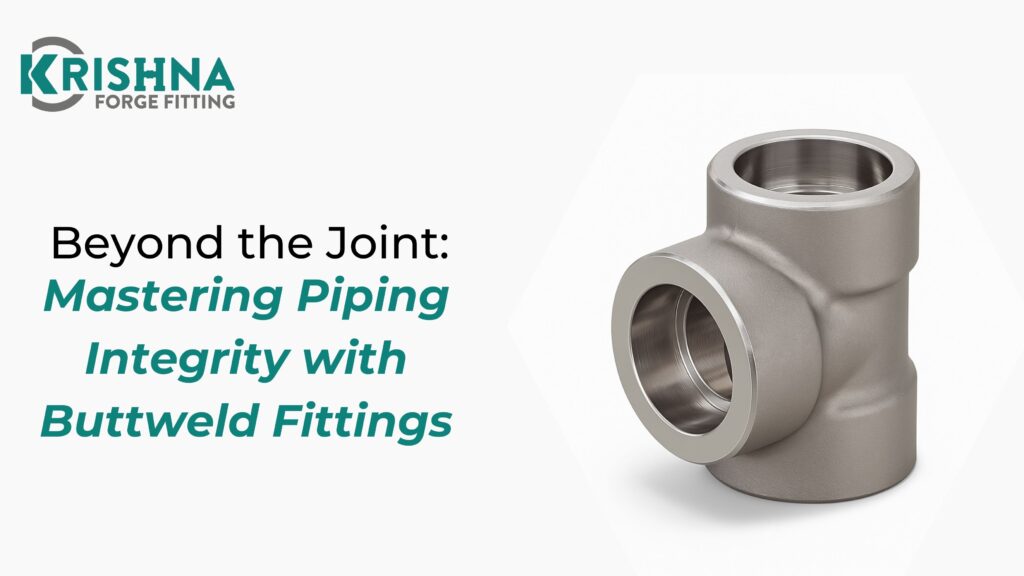
Buttweld fittings are piping components designed to be welded directly onto pipe ends to form a seamless, permanent connection. They are produced by shaping and beveling metal pieces—usually carbon steel, stainless steel, or alloy steel—to fit piping layouts. Common types include elbows that change direction, tees that split flow, reducers that adjust pipe size, and caps that close ends. This manufacturing process allows buttweld fittings to seamlessly integrate with pipes, maintaining strength and fluid continuity.
Why Buttweld Fittings Matter for Piping Integrity
Buttweld fittings are the backbone of piping integrity because they create joints that retain the pipe’s original strength. They prevent leaks and failures by forming smooth, reinforced transitions rather than relying on mechanical locks or threads. These fittings withstand high pressures and extreme temperatures, essential for industrial environments. Their seamless design eliminates crevices where corrosion or turbulence could start, extending the life of the piping system significantly.
Advantages of Buttweld Fittings
Buttweld fittings bring concrete benefits that make them indispensable in demanding piping systems:
- Superior mechanical strength: They match or exceed pipe strength, avoiding weak points.
- Smooth internal surfaces: This reduces flow disruption and pressure loss.
- Corrosion resistance: Their tight welds help protect against chemical damage.
- Long service life: Durable under mechanical, thermal, and environmental stress.
- Cost-effective maintenance: Less frequent repairs compared to threaded or socket weld fittings.
- Industry standard compliance: Manufactured according to strict standards such as ASME B16.9 and ASTM A234 to ensure reliability.
Common Applications of Buttweld Fittings
Industries widely use buttweld fittings where piping integrity is non-negotiable:
- Oil and gas: Transport pipelines and refineries require high-capacity, leak-proof joints.
- Chemical plants: Corrosive and high-pressure fluids demand strong, corrosion-resistant connections.
- Power generation: Steam and cooling pipes must endure thermal cycling and pressure.
- Food and beverage: Sanitary, smooth piping reduces contamination risk.
- Water and wastewater treatment: Corrosion and abrasion resistance extends pipeline durability.
How to Ensure Proper Installation and Quality Control?
Installation quality directly impacts piping integrity. Key considerations:
- Skilled welding: Precise bevel angles and weld beads maintain joint strength.
- Material matching: Same alloy or compatible grades minimize stress at joints.
- Inspection and testing: Use radiography, ultrasonic, or hydrostatic tests to confirm weld integrity.
- Proper alignment: Avoid misalignment to reduce stress on the pipe and fitting.
- Pre- and post-weld treatments: Cleaning and heat treatments prevent brittleness or cracking.
Enhancing the System Beyond the Joint
Buttweld fittings offer more than connections; they enable optimized system design:
- Variety of shapes and sizes accommodate complex layouts.
- Smooth transitions help resist pressure drops and fluid turbulence.
- Integration with high-performance piping materials enhances overall longevity.
- Facilitate quick system modification or expansion with minimal disruption.
FAQs
Q1: What makes buttweld fittings stronger than other types?
A: Buttweld fittings are welded directly to pipes, creating a continuous metal structure without seams or joints that could weaken under pressure or corrosion. This permanent bond matches the pipe’s strength, unlike mechanical fittings which rely on thread friction or compression.
Q2: Are buttweld fittings suitable for all piping materials?
A: They are commonly used with carbon steel, stainless steel, and alloys, covering most industrial piping needs. Compatibility depends on material grades to avoid galvanic corrosion or mechanical mismatch.
Q3: How often should buttweld fittings be inspected?
A: Routine inspections depend on operating conditions but typically occur annually or per maintenance schedules, especially for high-pressure or corrosive environments.
Q4: Can I use buttweld fittings in highly corrosive chemical plants?
A: Yes. When paired with suitable corrosion-resistant alloys or protective coatings, buttweld fittings perform well in aggressive chemical environments.
Q5: What installation errors most impact piping integrity?
A: Common issues include improper bevel preparation, poor welding technique, misalignment, and inadequate inspection, all of which can lead to leaks or premature failures.
Conclusion
Buttweld fittings represent a reliable foundation for mastering piping integrity. Their seamless connection ensures durable, leak-free systems that withstand challenging industrial conditions. Krishna Forge offers a trusted line of buttweld fittings designed for performance and longevity. Explore how our products can safeguard your piping systems and optimize operations. Contact Krishna Forge today for expert consultation and quality solutions tailored to your needs.
