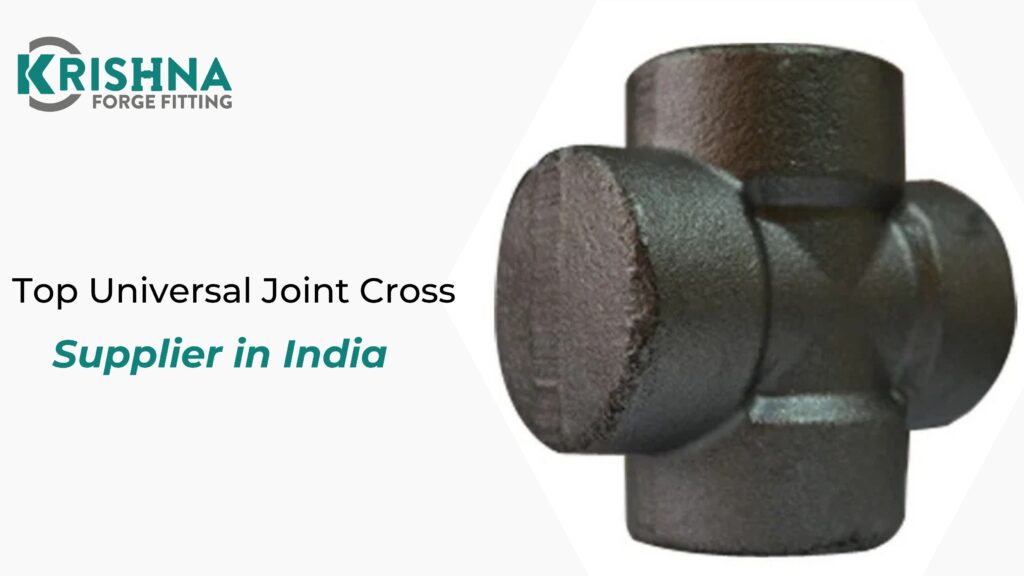
India’s automotive market is racing toward USD 264.96 billion by 2032, yet 70% of drivetrain failures still trace back to substandard universal joint crosses. While everyone talks about electric vehicles stealing the spotlight, the harsh reality is that the global automotive universal joints market reached USD 15.92 billion in 2023 and continues growing at 3.8% annually — because even Tesla’s supply chain depends on mechanical precision.
The Hidden Economics of Universal Joint Cross Selection
Quality is not negotiable in power transmission. A ₹500 universal joint cross can shut down a ₹50 crore production line.
India’s slice of this pie grows larger each quarter, driven not by volume alone, but by precision manufacturing capabilities that rival German and Japanese standards.
Consider the numbers: India’s automotive market will likely reach 7.5 million units in 2030, from 5.1 million units in 2023. Each vehicle requires multiple universal joints. Each industrial application demands even higher tolerances. The multiplication effect is staggering.
The Precision Problem: Why Most Suppliers Fall Short
Material Science Matters
The difference between a mediocre universal joint cross and an exceptional one isn’t visible to the naked eye—it’s embedded in molecular structure. Top-tier manufacturers understand that carbon content variations of 0.05% can determine whether a joint survives 100,000 cycles or 1 million cycles.
Heat Treatment Precision
While competitors rely on standard heat treatment protocols, leading suppliers invest in controlled atmosphere furnaces with temperature variations under ±3°C. This precision translates to uniform hardness distribution—the secret sauce behind extended service life.
Dimensional Accuracy
We’ve seen suppliers claiming ±0.1mm tolerances deliver parts with ±0.5mm variations. The cumulative effect on drivetrain efficiency is devastating.
The Industrial Applications Driving Demand
- Steel Plants: Where universal joint crosses operate under extreme temperatures and corrosive environments, failure isn’t just expensive—it’s catastrophic.
- Water Treatment Facilities: Continuous operation requirements demand components that maintain efficiency over decades, not months.
- Fertilizer Industry: Chemical exposure testing becomes paramount when joints must resist ammonia and sulfur compounds.
- Fabrication Units: Custom applications requiring non-standard specifications separate professional suppliers from catalog vendors.
What Separates Elite Suppliers from the Pack
Manufacturing Infrastructure
Elite suppliers operate with CNC machining centers, not manual lathes. They maintain in-house metallurgy labs, not outsourced testing. They implement statistical process control, not hope-and-pray quality management.
Raw Material Sourcing
Premium suppliers maintain direct relationships with steel mills, ensuring consistent chemical compositions and mechanical properties. They don’t purchase from spot markets where quality fluctuates with commodity prices.
Testing Protocols
Comprehensive testing includes:
- Torque transmission capacity verification
- Fatigue life analysis under varying load conditions
- Environmental resistance testing
- Dimensional stability across temperature ranges
The Krishna Forge Advantage: Engineering Excellence Meets Market Reality
Krishna Forge Fitting represents the evolution of Indian manufacturing—where traditional forging expertise meets modern precision engineering. Their universal joint cross manufacturing combines decades of metallurgical knowledge with contemporary quality systems.
Why industry leaders choose Krishna Forge?
- Integrated Manufacturing: From raw material procurement to final inspection, every process remains in-house, ensuring quality consistency that outsourced operations cannot match.
- Application-Specific Engineering: Rather than pushing standard catalog items, they engineer solutions for specific industrial requirements—whether it’s enhanced corrosion resistance for chemical plants or increased load capacity for heavy machinery.
- Quality Transparency: Complete material traceability and comprehensive test documentation accompany every shipment. When regulatory compliance matters, documentation quality becomes a competitive differentiator.
- Supply Chain Reliability: Strategic inventory management ensures availability during critical maintenance windows. When production lines depend on component availability, supplier reliability becomes invaluable.
The Market Trajectory: Where Smart Money Goes Next
The India automotive market demand is expected to reach 8,363,344 units by 2030, but the real opportunity lies beyond automotive applications. Industrial automation, renewable energy infrastructure, and heavy machinery sectors demand universal joint crosses with specifications that push traditional manufacturing boundaries.
The next decade belongs to suppliers who understand that universal joint crosses aren’t commodities—they’re precision components that determine system reliability
Smart procurement managers recognize this shift. They’re moving from price-focused vendor selection to value-based partnerships with manufacturers who demonstrate consistent quality, technical competence, and supply chain resilience.
The Bottom Line: Precision Pays, Shortcuts Cost
In India’s rapidly evolving industrial landscape, universal joint cross selection has evolved from a purchasing decision to a strategic choice. The cost difference between premium and standard components often represents less than 0.1% of total system value, yet the reliability impact can determine operational success or failure.
The question isn’t whether you can afford premium universal joint crosses—it’s whether you can afford the operational disruption, maintenance costs, and reputation damage that substandard components inevitably deliver.
Choose suppliers who understand that in precision manufacturing, “good enough” never is.
