
When it comes to plumbing and industrial piping, choosing the correct fittings ensures efficiency, safety, and long-term durability. Two of the most utilized fittings are barrel nipples and pipe nipples. Although similar in appearance, they serve different functions and have unique advantages. Understanding the differences can help you select the right component for your system and ensure high performance under any conditions.
What are Pipe Nipples?
Pipe nipples are short pieces of pipe with male threads on both ends. They act as connectors between two other pipes or fittings and come in a variety of lengths, diameters, and materials.
Key Features of Pipe Nipples
- Fully Threaded: Threads on both ends allow quick, secure connections.
- Versatile Materials: Available in carbon steel, stainless steel, brass, and galvanized steel.
- Corrosion Resistance: Material options make them resilient against corrosion, chemicals, and heat.
- Flexible Lengths and Sizes: Produced in numerous sizes for different pipeline requirements.
- Wide Compatibility: Can be cut or customized for specialized applications.
Common Applications of Pipe Nipples
- Plumbing Systems: Essential for joining water-supply and drainage lines.
- Industrial Piping: Used for transferring liquids and gases in various industries.
- Gas and Water Supply: Trusted for safe connections in domestic and commercial setups.
- Chemical & Petroleum Processing: Withstands aggressive and corrosive fluids.
- HVAC Systems: Used for fluid transfer in heating, ventilation, and air conditioning.
What are Barrel Nipples?
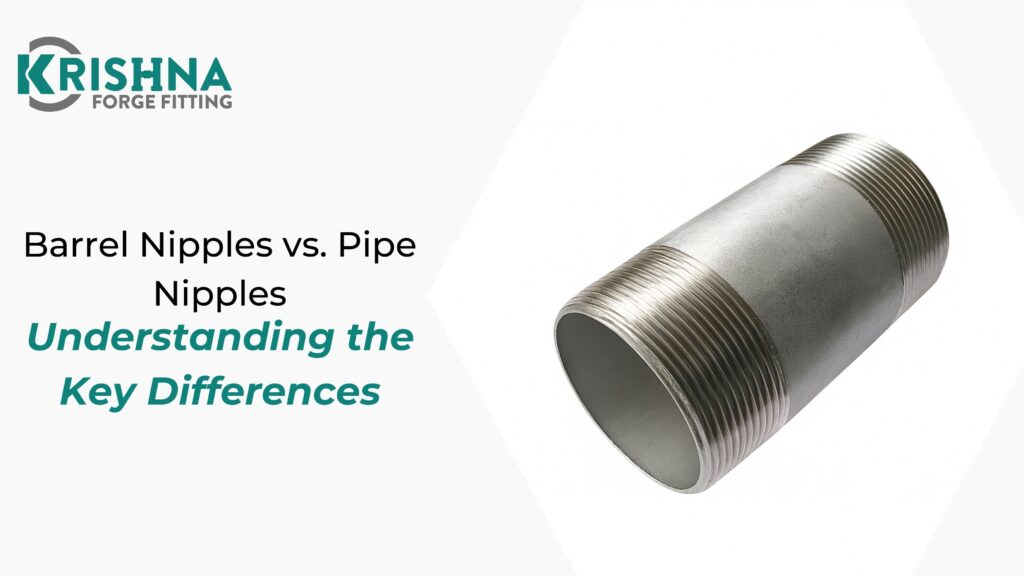
A barrel nipple resembles a pipe nipple but has a distinctive smooth, unthreaded section in its middle with threads on each end. This design provides additional spacing and superior grip during installation.
Characteristics of Barrel Nipples
- Unthreaded Middle Section: Enables extra space and better handling during assembly.
- Threaded Ends: Both ends are threaded to ensure tight and leak-proof connections.
- Enhanced Durability: Often made of carbon steel for extra strength and resistance to pressure.
- Material Options: Carbon steel, stainless steel, brass, and alloy steel versions available.
- Improved Stability: Ideal for high-pressure systems and areas exposed to vibration or movement.
Barrel Nipple Applications
- Hydraulic and High-Pressure Systems: Favored in refineries, gas plants, and chemical industries.
- Industrial Machinery: Used for secure and stable connections in heavy-duty operations.
- Steam, Gas, and Chemical Pipelines: Suitable for aggressive and high-temperature environments.
- Heating and Boiler Systems: Provides strength and reliability where heat and pressure are concerns.
Key Differences: Barrel Nipples vs. Pipe Nipples
| Feature | Pipe Nipples | Barrel Nipples |
| Design | Fully threaded (threads on both ends) | Unthreaded middle section; threaded on both ends |
| Main Function | Simple connection between two pipes/fittings | Adds spacing, grip, and stability to the connection |
| Best Use Cases | General plumbing, low/medium-pressure applications | High-pressure, heavy-duty, or vibration-prone environments |
| Material Options | Carbon steel, stainless steel, brass, galvanized steel | Carbon steel, stainless steel, brass, alloy steel |
| Typical Industries | Residential, commercial plumbing, water/gas lines | Hydraulic, oil & gas, chemical processing, industrial |
| Grip/Stability | Standard | Enhanced due to unthreaded section |
Table: Quick Comparison
| Feature | Pipe Nipples | Barrel Nipples |
| Threading | Full-threaded, both ends | Threaded ends, smooth center |
| Ideal For | Standard pipe connections | Spacing, high-pressure linking |
| Durability | Varies by material | High, especially in carbon steel |
| Handling | Basic | Easier to grip and assemble |
| Pressure Resistance | Moderate | High (preferred for demanding) |
Choosing the Right Nipple for Your Project
- Simple Connections: Opt for pipe nipples for standard, low-pressure joints or temporary connections.
- Demanding Applications: Use barrel nipples for high-pressure systems, specialized spacing needs, or installations exposed to vibration.
- Material Selection: For harsh environments, carbon steel offers excellent durability and resistance to corrosion, pressure, and temperature.
Additional Facts and Tips
- Standards and Certifications: Always check product standards (such as ASTM, ASME) and certifications to ensure safety and compliance for industrial jobs.
- Customization: Many manufacturers, including Krishna Forge Fittings, offer custom nipple sizes, lengths, and threading to suit unique projects.
- Installation: Proper torque application and compatible thread sealants are vital for leak prevention in both barrel and pipe nipples.
- Lifecycle Considerations: High-quality fittings reduce maintenance, downtime, and replacement costs in the long run.
Why Choose Krishna Forge Fittings?
As a trusted manufacturer, Krishna Forge Fittings specializes in premium quality barrel and pipe nipples. Our products feature:
- Consistent dimensional accuracy
- Superior durability for industrial, commercial, and residential needs
- Materials certified for high-pressure and corrosive environments
Conclusion
Understanding the specific differences between barrel nipples and pipe nipples can significantly improve your piping system’s performance and reliability. Whether you need a simple connector or a robust, high-pressure solution, choosing the right type of nipple is crucial. Trust Krishna Forge Fittings for all your piping fitting needs and ensure long-lasting, efficient, and safe operations.
Contact our expert team for custom orders and technical guidance on selecting the right nipple fittings for your next project.
